Fieldwork Visit to Daksa Village
06-12 December 2025
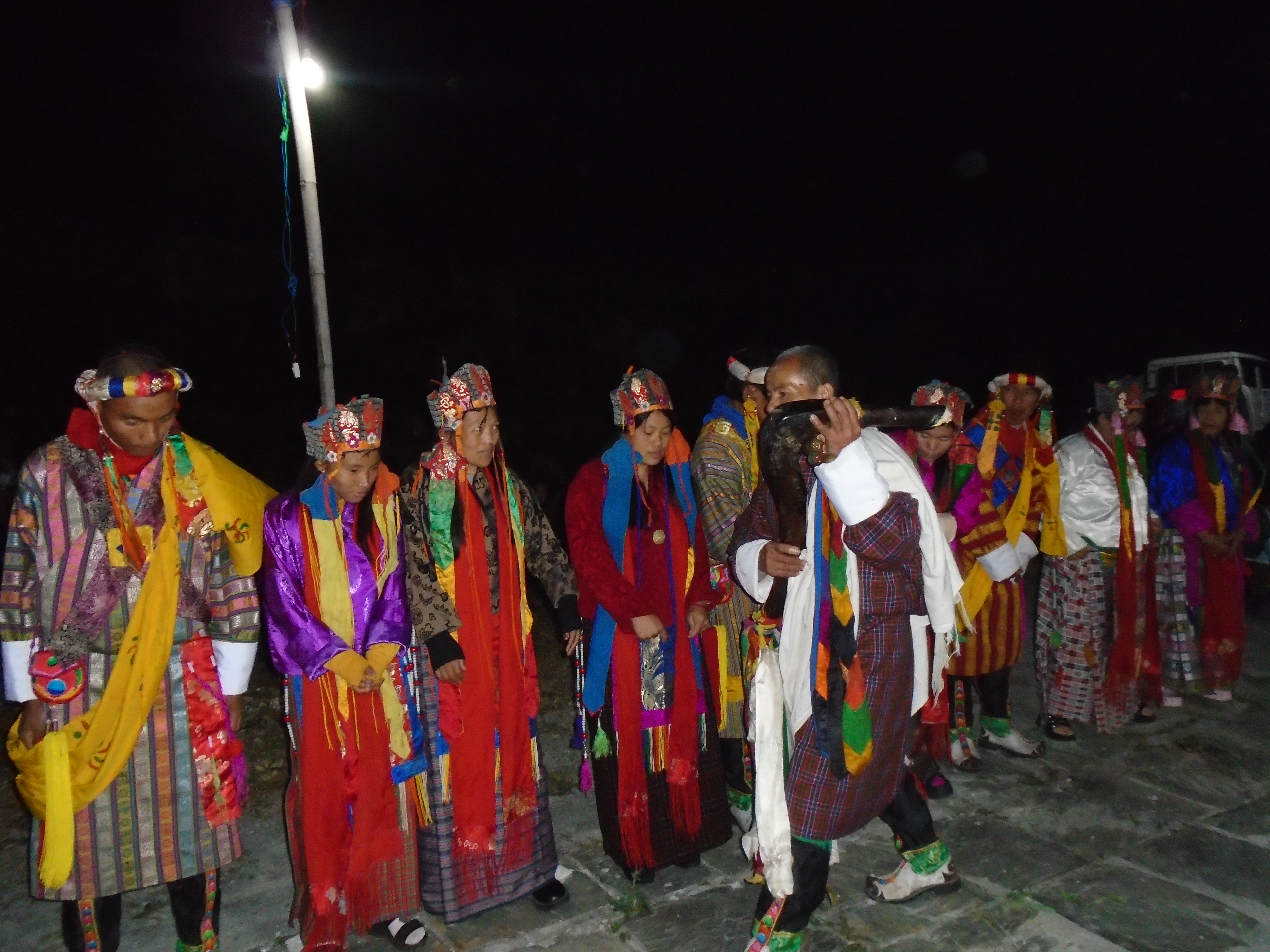
Between 06 and 12 December 2025, the Gongduk Research Assistant Rinchen visited Daksa village under Gongdue block, Mongar district, where he attended and documented the Kharphu festival.
06-12 December 2025
Between 06 and 12 December 2025, the Gongduk Research Assistant Rinchen visited Daksa village under Gongdue block, Mongar district, where he attended and documented the Kharphu festival.
October-November 2025
Between 27 October and 01 November 2025, the project PI Tim and the Monkha Research Assistant Sonam visited the village of Riti under Jigmechoeling block, Sarpang district. Riti is located 88 kilometres from Gelephu city. The road is only partially paved, and the journey can take between six and ten hours depending on road conditions, with roadblocks frequently occurring, in particular at a location known as Boxcut on the Gelephu–Zhemgang highway.
Riti village was established approximately 80 years ago by Monpa people who migrated from Rukha village in Wangdue Phodrang district. The Monkha varieties spoken in Rukha and Riti are very similar. The inhabitants of Riti depend almost entirely on large cardamom as a cash crop.
In Riti, Sonam and Tim conducted an awareness session with a representative from each of the 15 Monpa households. During this session, they explained the purpose of the Lo-Rig project and its goals and objectives. Community members were asked for their understanding of and permission for the research and were given the opportunity to ask questions or raise concerns.
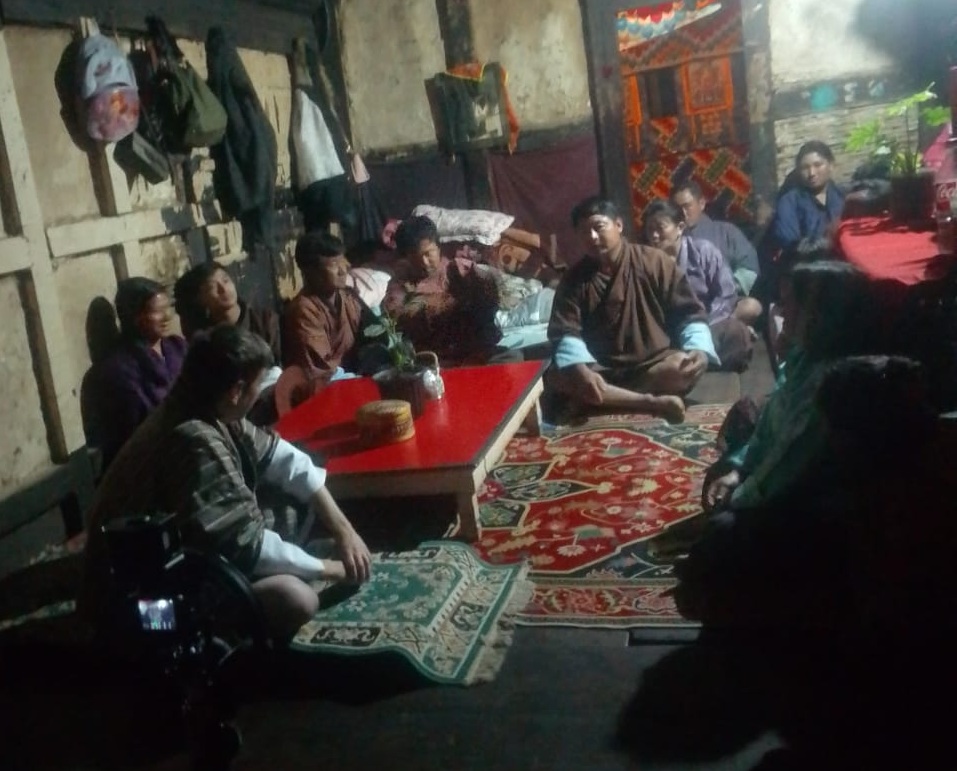
Several community members noted that on previous occasions Western, Japanese, and Bhutanese researchers had visited their village, asked questions about their language, made recordings, took notes, and in some cases even drew blood. However, no results, books, or other outcomes were ever shared with the community, which had led to considerable disappointment. Sonam and Tim assured the community that the Lo-Rig project would strive to produce tangible outcomes that would also be shared with them, which was received positively by the assembled participants.
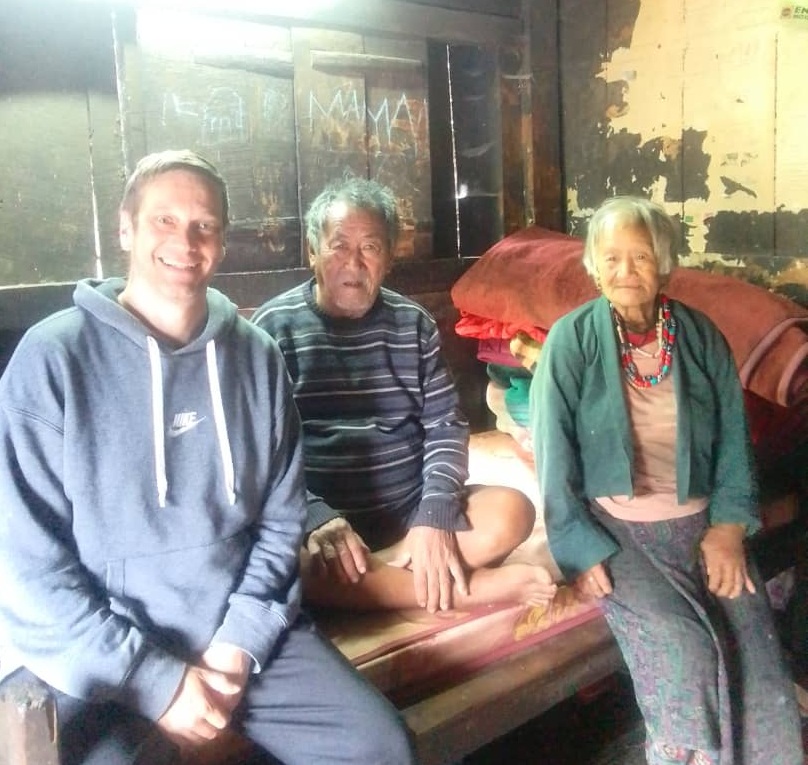
Subsequently, Sonam and Tim made recordings of narratives provided by the two most senior community members, Ap Singye and Ap Tandin. They also recorded a wordlist from Tenzin and Peday.
October-November 2025
Between 06 and 24 October and between 17 and 28 November 2025, the project PI Tim conducted a training programme for the two Bhutanese Research Assistants, Sonam and Rinchen. The training commenced with an introduction to the Lo-Rig project goals and objectives, the project staff, and the work packages and planning for the five years of the project.
The Research Assistants were also introduced to the field of linguistics, including topics such as basic phonetics and phonology and the International Phonetic Alphabet (IPA), parts of speech, verbal agreement including the project's focus on biactantial and polypersonal verbal agreement, orthographies and orthography development, and the linguistic diversity of Bhutan.
The two Research Assistants were familiarised with important topics such as research ethics, data protection, informed consent, open access, and cybersecurity. The Participant Information Leaflets (PILs) and Informed Consent Forms developed at Trinity College Dublin were translated into Dzongkha and subsequently summarised and translated into Gongduk and Monkha.
The Research Assistants were introduced to best practices in linguistic fieldwork. They translated the regionally relevant wordlist into Dzongkha and Tshangla and practised elicitation and transcription in their respective languages, Monkha and Gongduk.
The Research Assistants also practised using the recording equipment in different contexts and conditions. A field visit was made to the Folk Heritage Museum in Canggangkha, Thimphu, to gain an understanding of the types of household items, tools, and practices that would be of interest for elicitation and recording in their respective communities.
The Research Assistants received their project laptops, and the required software was installed on them. Tim explained the ELAN–FLEx workflow and the potential scope and benefits of applying Automatic Speech Recognition to speed up the transcription of recordings. They then practised the manual transcription of recordings in ELAN.
17–19 September 2025
Between 17 and 19 September 2025, Lo-Rig Principal Investigator Tim Bodt participated in a network meeting on "Automating language documentation and description", held at Uppsala University in Sweden.
The meeting brought together around 20 academic researchers working in language documentation and human language technologies. Participants discussed how language technologies could be better incorporated into the work of linguists documenting and describing endangered languages.
This meeting contributed to wider collaboration and knowledge exchange around the role of technological tools in supporting language documentation and description.
04 September 2025
On 04 September 2025, Lo-Rig Principal Investigator Tim Bodt presented on "Contact between Kusunda and Sino-Tibetan" at the 58th International Conference on Sino-Tibetan Languages and Linguistics (ICSTLL58), held at the Department of Linguistics, University of Bern, Switzerland.
The talk was attended by around 30 linguists working on the Sino-Tibetan (Trans-Himalayan, Tibeto-Burman) language family, to which Gongduk and Monkha also belong.
More information about ICSTLL58 is available on the University of Bern website:
58th International Conference on Sino-Tibetan Languages and Linguistics
18 August 2025
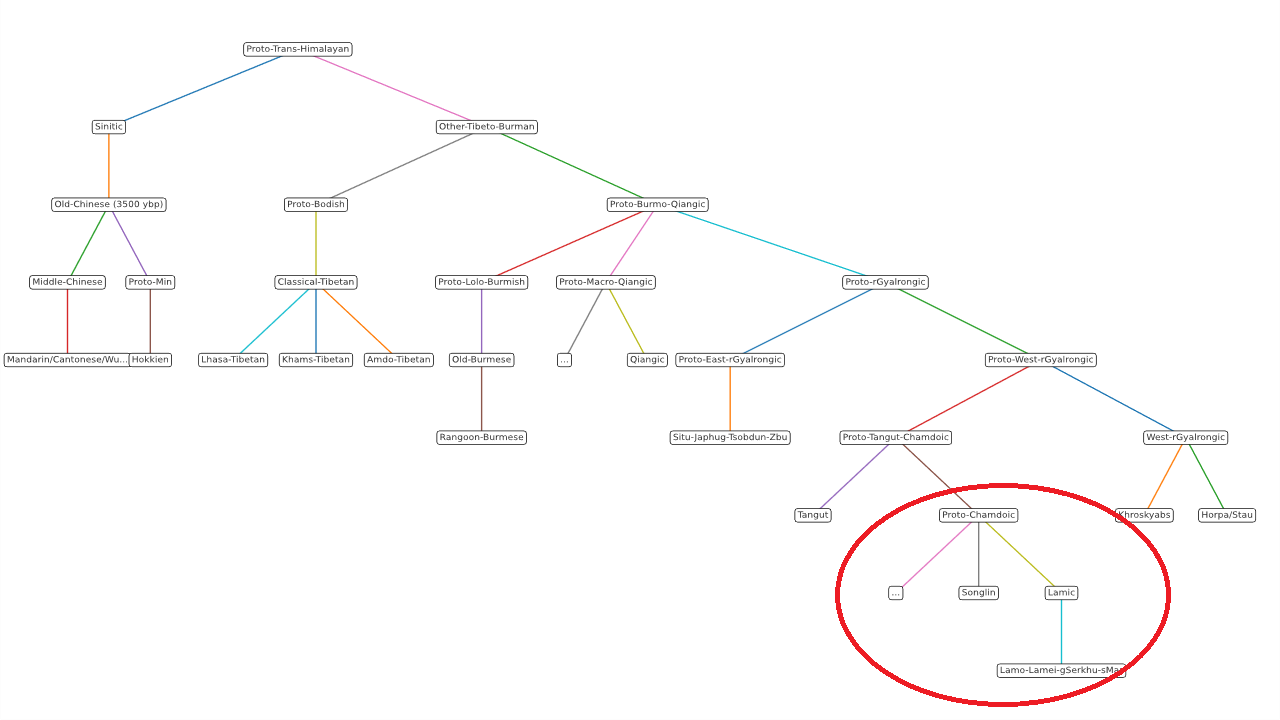
On 18 August 2025, James Engels of the University of Edinburgh and Lo-Rig Principal Investigator Tim Bodt presented a paper titled "Qiangic interrelatedness and Macro-Gyalrongic: new insights from Songlin" at the 27th International Conference on Historical Linguistics in Santiago de Chile, Chile.
The conference brought together around 500 historical linguists from around the world. The presentation contributed to ongoing discussions on the historical relationships among Trans-Himalayan languages, with particular attention to Songlin and its position in relation to Qiangic, Chamdoic, and Macro-Gyalrongic languages.
More information about the conference is available on the official conference website:
27th International Conference on Historical Linguistics
August-September 2025
The two Research Assistants of the Lo-Rig project, Sonam Lhamo and Rinchen Wangdi, officially took up their positions on 01 August 2025.
They started their work by conducting a linguistic survey of their respective speech communities, Monkha and Gongduk. This linguistic survey has already resulted in valuable data on the total number of speakers of these languages and their proficiency, the inter-generational transmission of the languages, and the reasons for the decline in the speaker populations.
While the situation of Monkha was found to be more positive than expected, the Gongduk language was found to be in a more dire position than was initially assumed.
July-September 2025
The Lo-Rig project officially commenced on 01 July 2025.
In the subsequent months, the project was formally set up at Trinity College Dublin and at the Centre for Bhutan and GNH Studies (CBS) in Bhutan.
15 June 2025
On 15 June 2025, Lo-Rig Principal Investigator Tim Bodt gave the opening talk for the First Summer School for Ancient Trans-Himalayan Languages, organised by the Trinity Centre for Asian Studies at Trinity College Dublin.
The talk focused on the possible use of the Tibetan script for writing Tshangla, a language spoken in eastern Bhutan, western Arunachal Pradesh, and southeastern Tibet. The talk was attended by around 80 on-site and online participants of the Summer School.
More information about the 2025 Summer School is available on the Trinity Centre for Asian Studies website: