Skip to content

Blog

Gongduk Data Collection in the Field

18 November 2026

After successfully recording Gongduk speakers living in Thimphu, the PI Tim and RA Rinchen have been conducting fieldwork in Gongdue gewog (block) of Mongar dzongkhag (district) in eastern Bhutan, the traditional home of the Gongduk people.
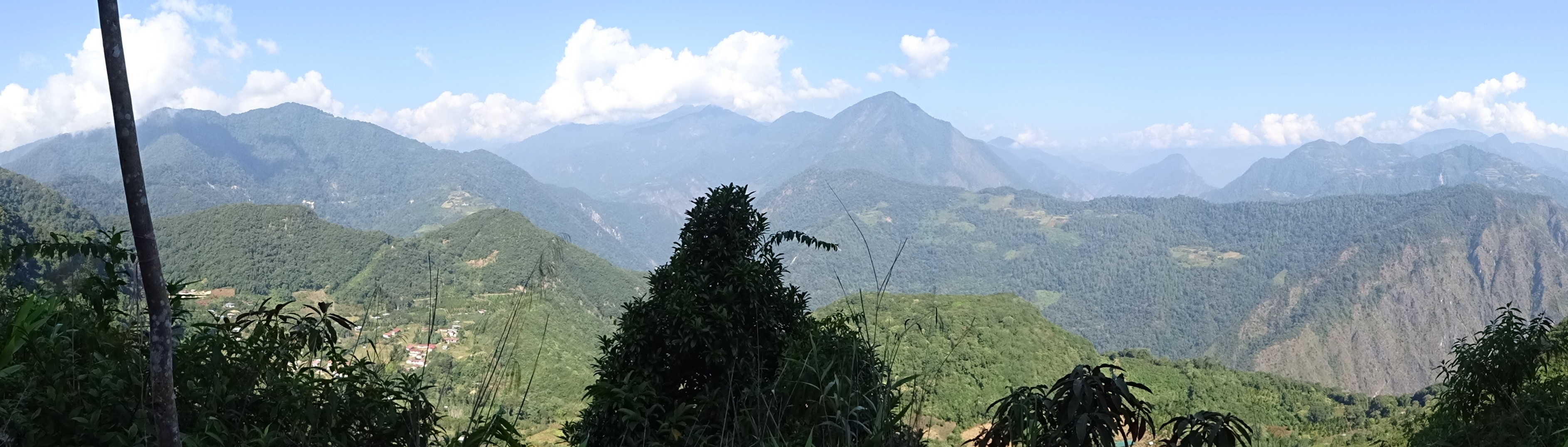
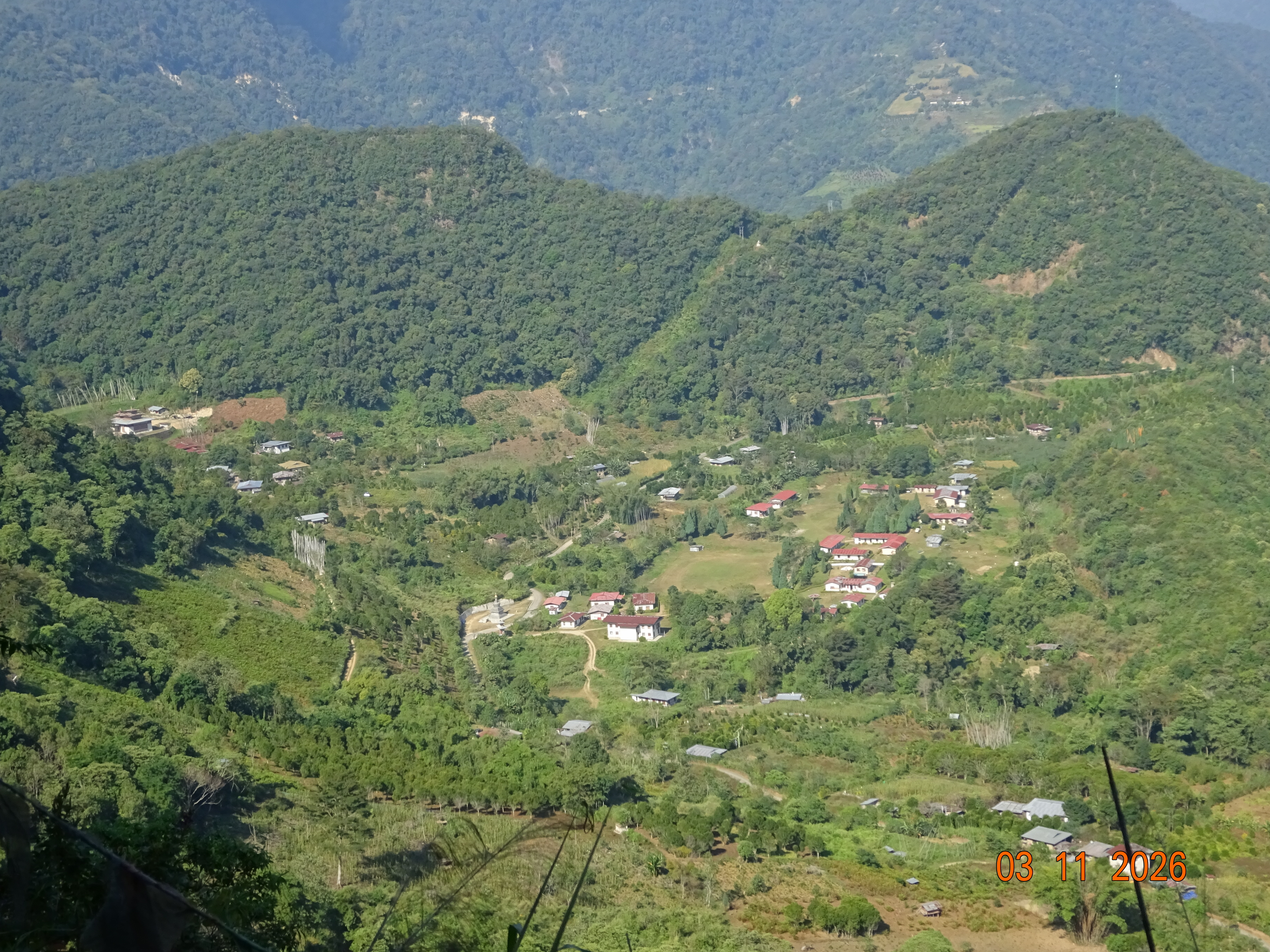
Panoramic view of the mountainous Gongduk speech area
Overview of the Gongduk speech area.

Community consultations and recordings

Tim and Rinchen traveled widely across the gewog, visiting the villages of Pangthang, Gongde, Toekor, Damkhar, Domong, Salibi, Tshabor, Phosala, Midan, Pam, Gorthongla, Gongdu, Daksa, Pikari, Bakla and Idi. In each village, they held a group consultation meeting and obtained community consent for data collection, archiving and publication as per the prescribed protocol. They also updated the sociolinguistic survey of the Gongduk-speaking population.

They then mainly recorded the most elderly speakers, collecting a total of 14 1/2 hours of recordings of various genres. Nearly 2 hours are the recorded consent sessions; a little over 2 hours are elicitation of minimal pairs; almost 3 1/2 hours are discussions about livelihoods in past and present, including foraging, agriculture, domestic animals, wild animals and their impact on humans, climate change, and handicrafts; almost 1 hour consists of narratives such as fables and stories; 1/2 an hour consists of personal narratives and experiences; almost 1/2 an hour consists of discussions about the sociolinguistic status of Gongduk; and a little over 5 hours are historical narratives, including about local deities, religious practices and landmarks, the settlement history of the area, taxation in the past, etc. Some recordings are monologues, others are question-and-answer sessions, dialogues, and group discussions.
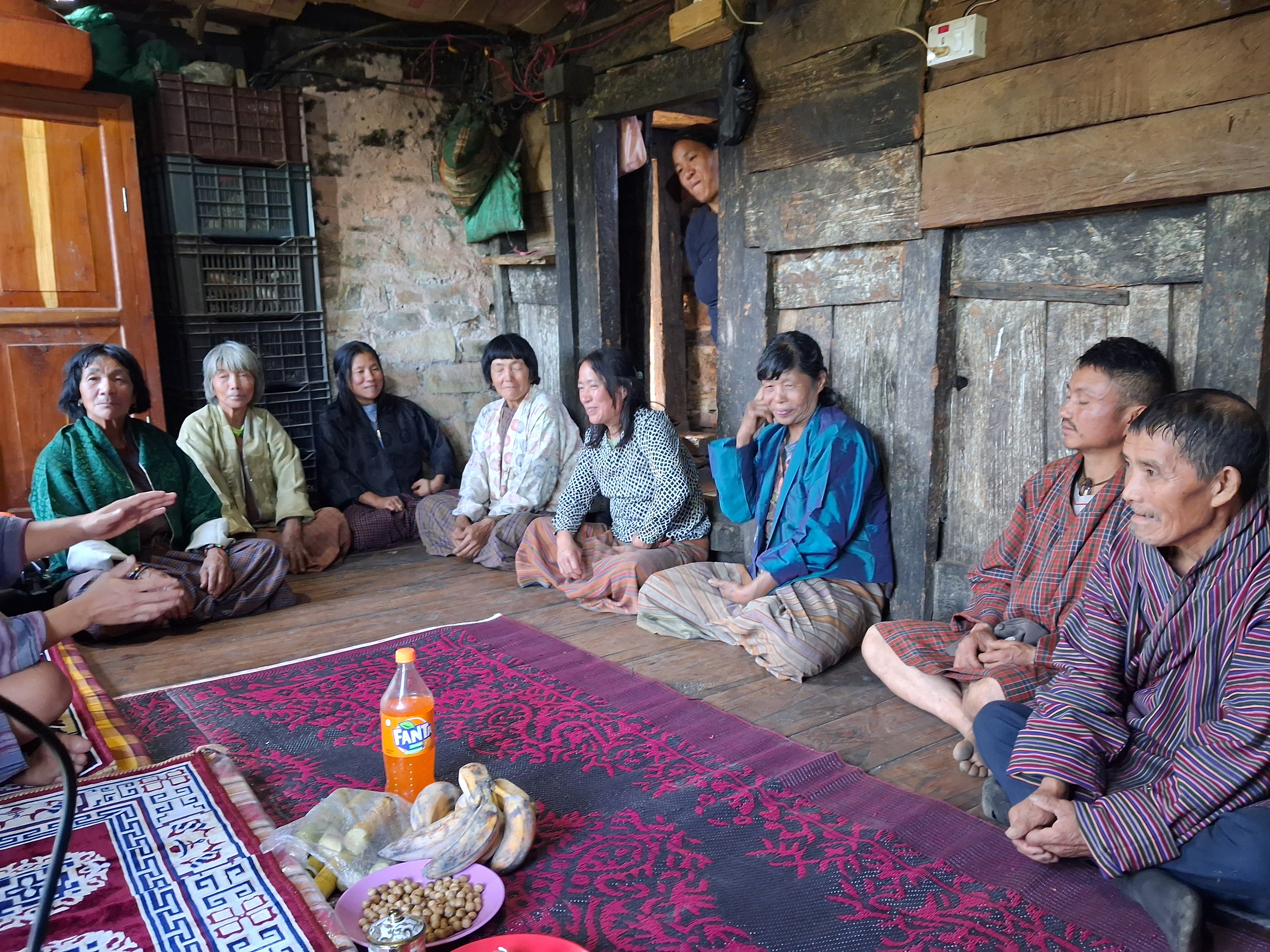
Community consultation with Gongduk speakers seated together in Midan village
Community consultation meeting in Midan village.
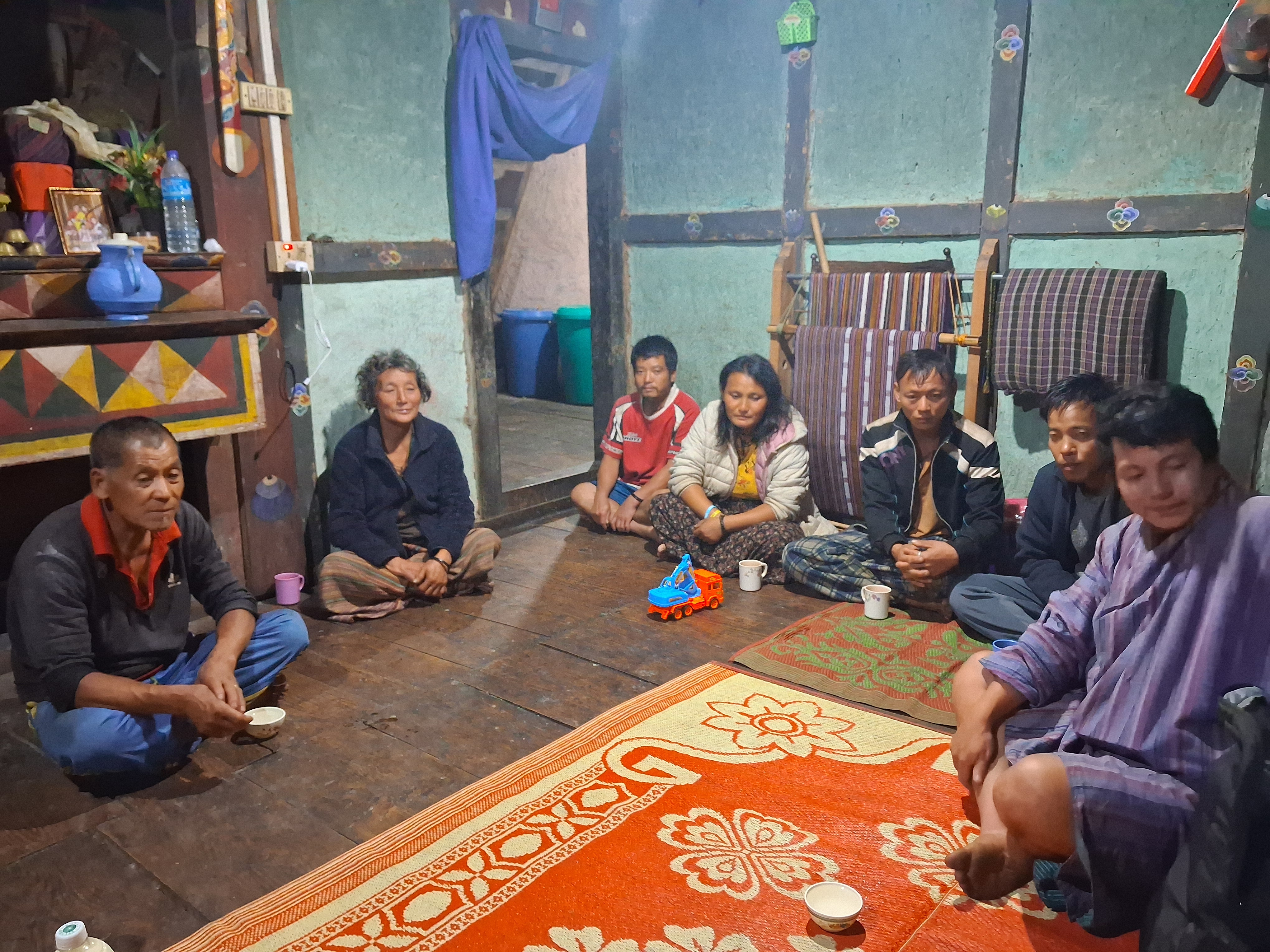
Community consultation with Gongduk speakers seated in a room in Pam village
Community consultation meeting in Pam village.
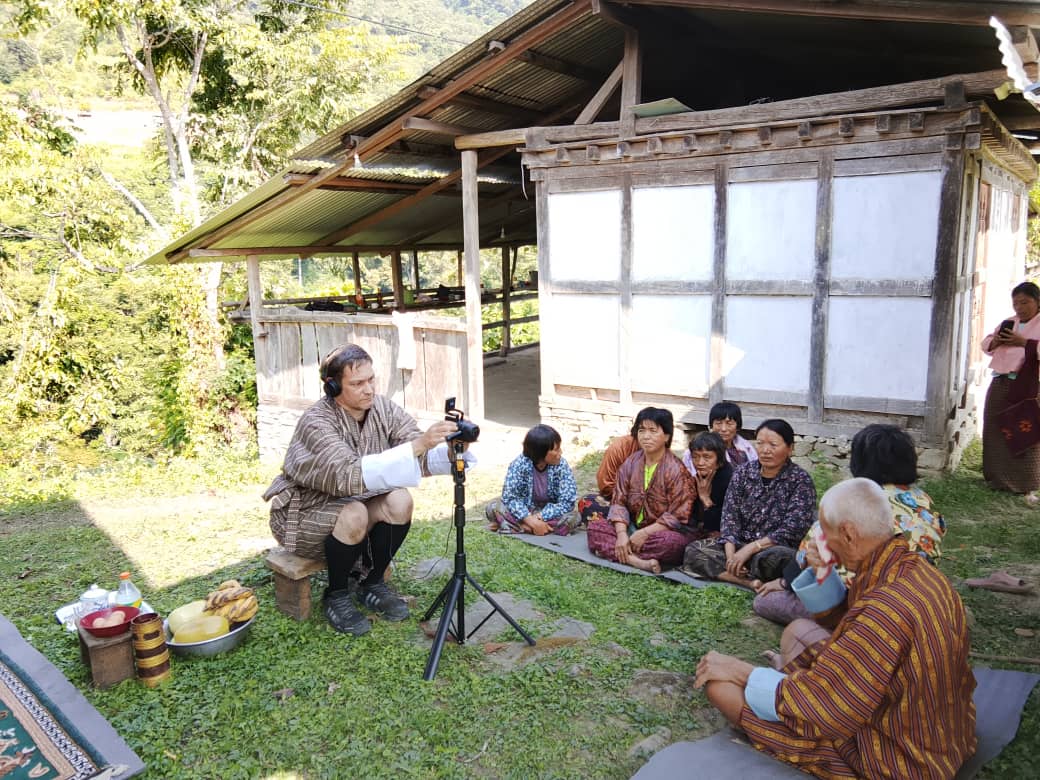
Recording session with community members seated outdoors in Damkhar village
Recording session at Damkhar village.
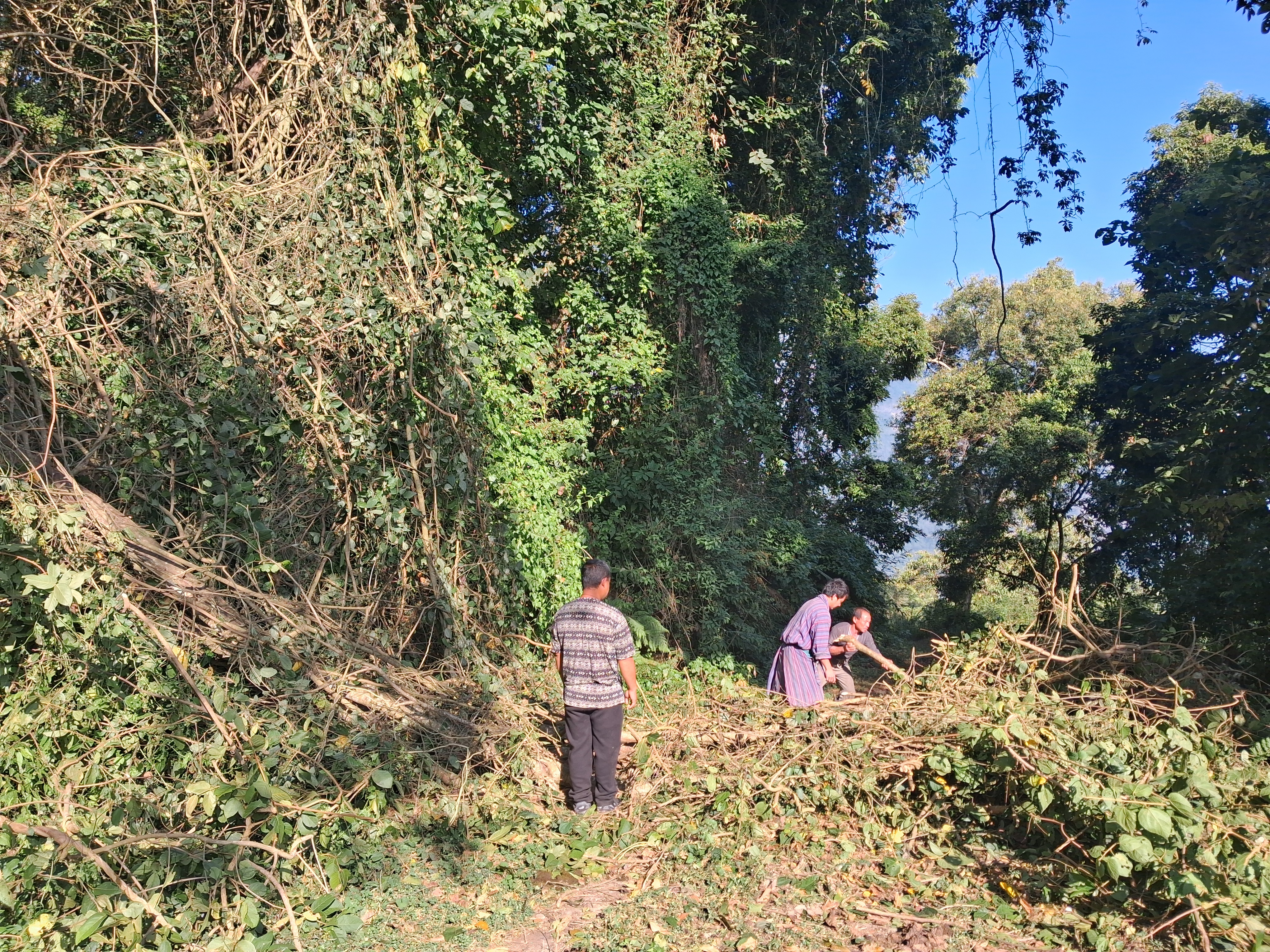
People clearing a fallen tree from a road surrounded by vegetation
Removing a tree that had fallen on the road between Pam and Gorthongla villages.

The community and language transmission

Tim and Rinchen consulted 32 females and 26 males, ranging in age from 33 to 88 years old, with the majority in their mid-fifties, sixties and early seventies. This age range reflects the average age of the population in the gewog, which has seen a massive outward migration of the educated population. The arrival of basic necessities, such as electricity, drinking water supply and roads, since 2015-2020 was too late to stem this migration, and education, health and extension facilities have since been reduced due to a lack of population and pupils.

In addition, historical inward migration in the Damkhar-Pangthang area has reduced the Gongduk-speaking population there, with many households shifting to Khengkha and Tshangla except for in Damkhar village itself.

This lack of a viable speaker community allowing the transmission of the language to the next generation was identified as the largest threat to the viability of Gongduk. Speakers observed that once people move out of Gongduk gewog, and once people marry people outside the Gongduk speech community, they cease to speak the language on a daily basis, and they do not transfer the language to their children.

With the 2,640 MW Kuri-Gongri hydroelectric project coming up in the Kuri-Gongri River, that flows to the East of Gongdue, the gewog is expected to witness further change soon. While the Yangbari-Tshobaley-Telung area will see the largest influx of (temporary) workers and associated facilities, there is some hope that the Daksa Primary School will be upgraded to function as a catchment school for the area. This would enable Gongduk-speaking children to access education in a Gongduk-speaking area and may facilitate language transmission.

Landscapes and locations
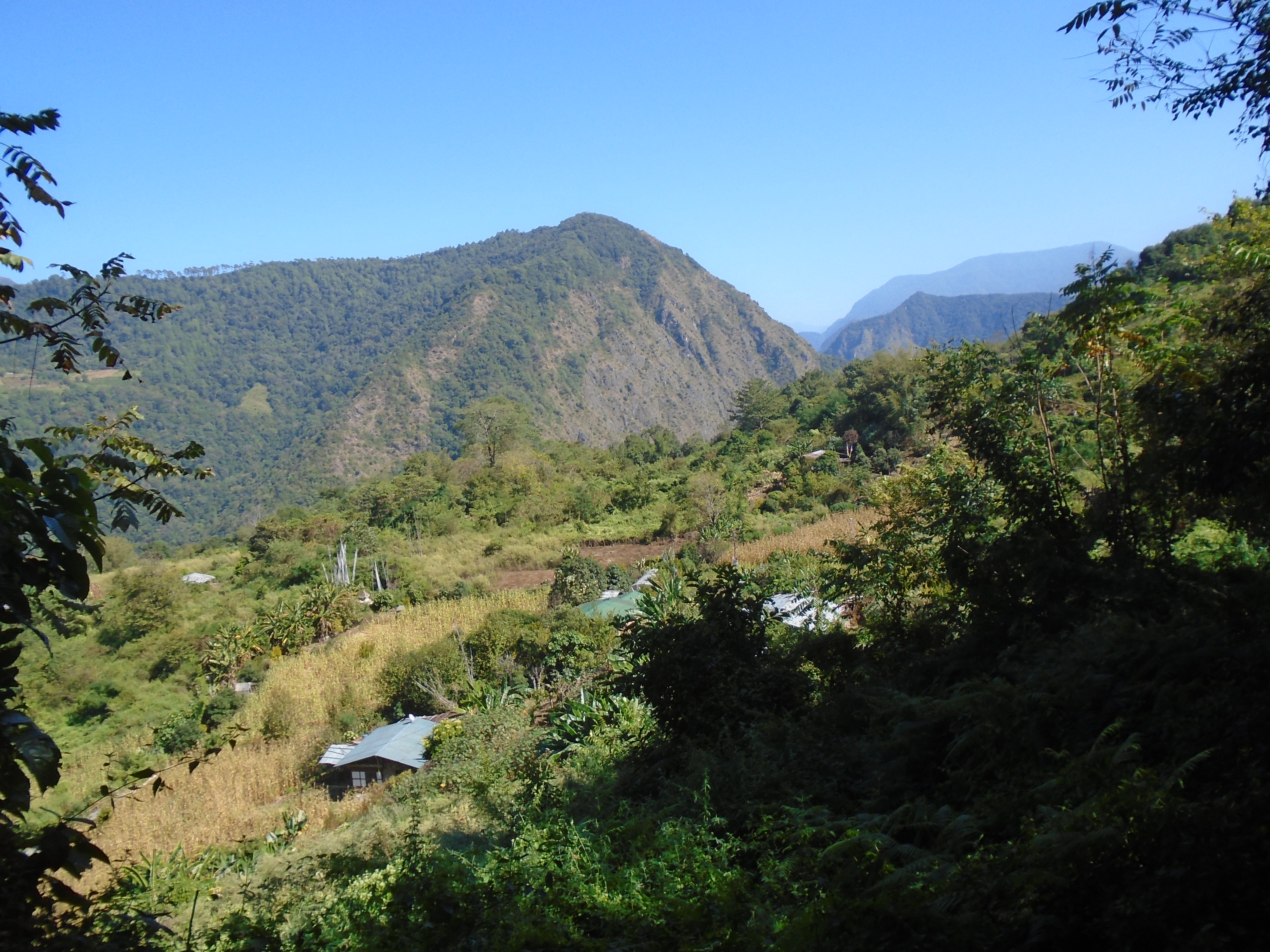
Mountainous landscape surrounding Gongdu village
View of Gongdu village.
View of Daksa village and surrounding hills
View of Daksa, the Gongdue gewog headquarters, including the gewog office, basic health unit and primary school.
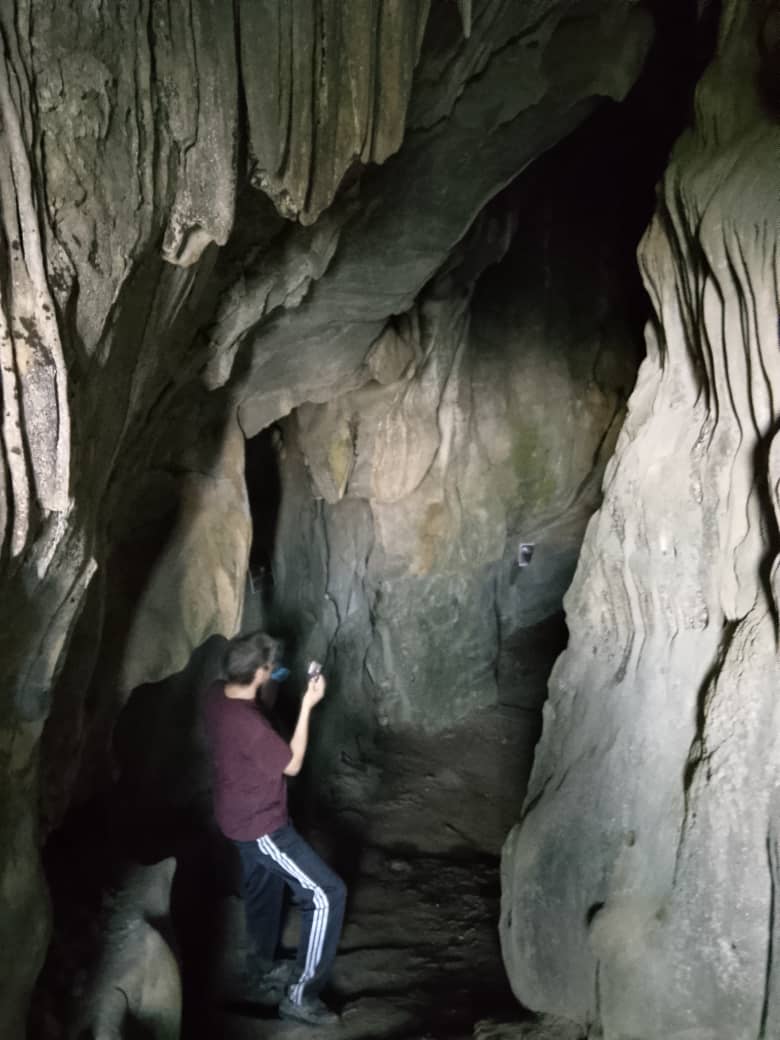
Interior of a cave at Toekor village with a person holding a light
The upper cave at the Toekor cave complex. Caves in the area contain stalactites and stalagmites, extend deep into the mountains, and are home to bat colonies.

Next steps

A follow-up field visit in January 2027 will survey the remaining villages of Bangbangla, Bogarbi, Kumadzong and Laptsa and collect wordlists, verbal agreement paradigms, and additional natural speech.
Lo-Rig Research Presented at the 29th Himalayan Languages Symposium

01 November 2026

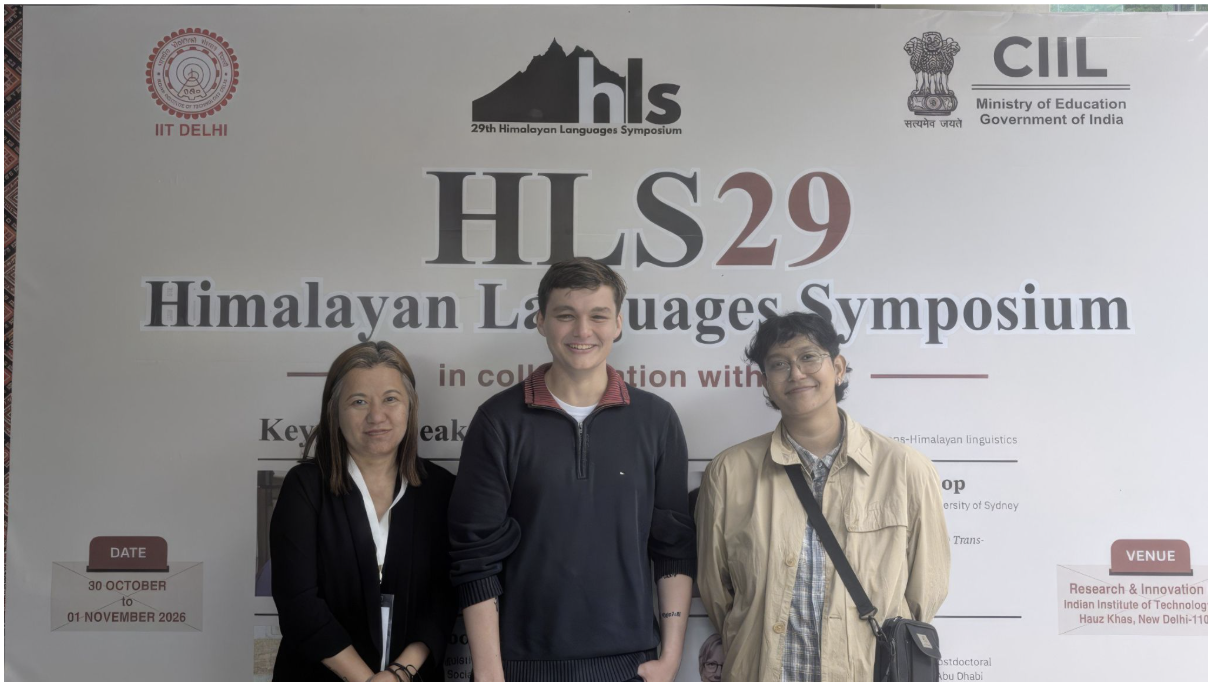
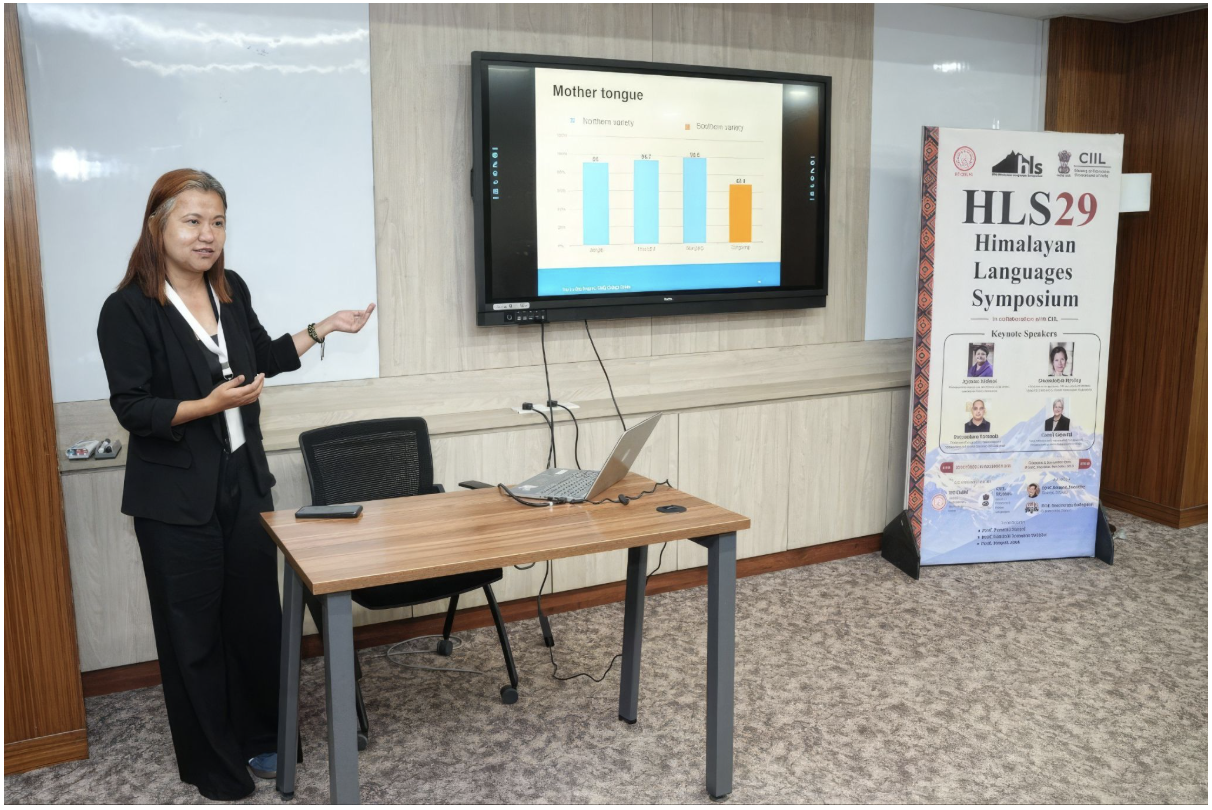
Tshering Om Tamang presented research co-authored with Sonam Lhamo, titled "Sociolinguistic Survey of 'Ole': Setting the Record Straight", at the 29th Himalayan Languages Symposium (HLS-29), held from 30 October to 1 November 2026 at the Indian Institute of Technology (IIT) Delhi, New Delhi, India. Drawing on sociolinguistic survey data collected from the Monpa communities of Cungseng, Riti, Jangbi, Phumzur and Wangling in Bhutan, the presentation examined language use, mother-tongue identification and the sociolinguistic situation of Monkha. The symposium brought together researchers and linguists working on Himalayan languages, providing an opportunity to share research and engage in discussions on linguistic diversity, language documentation and preservation.

Tshering Om Tamang presenting her sociolinguistic survey of the Monpa communities

Tshering Om Tamang presenting her sociolinguistic survey of the Monpa communities

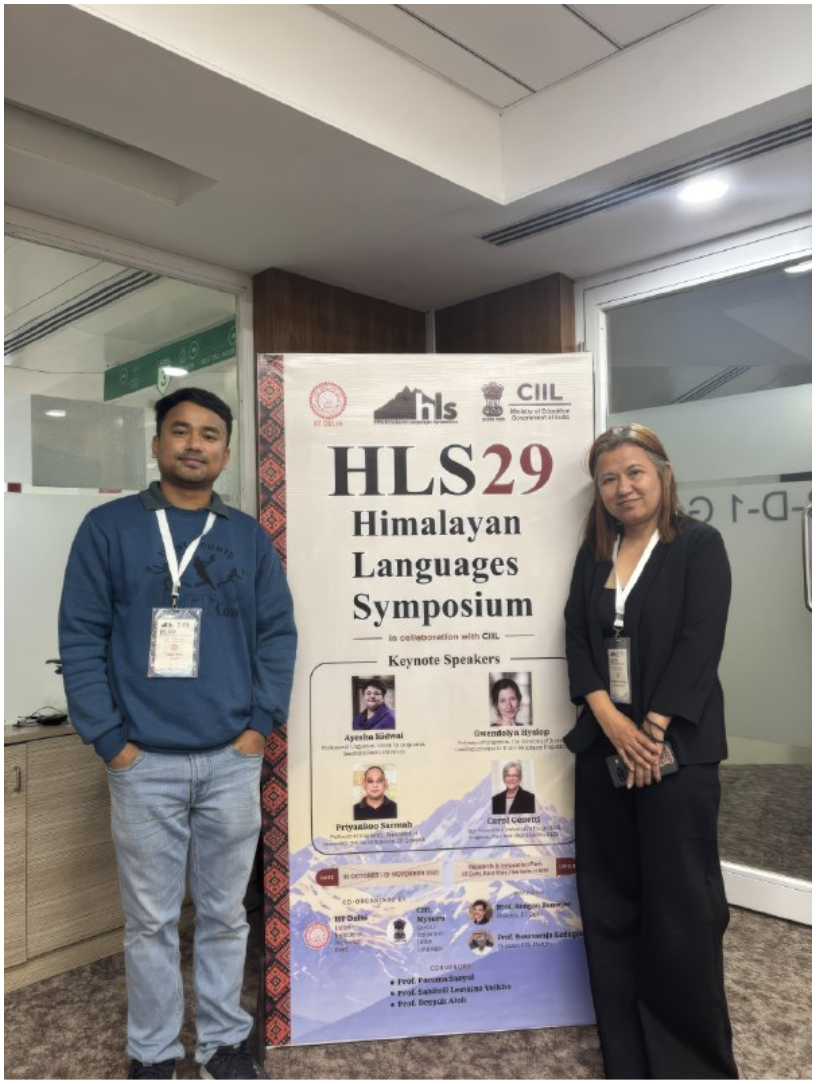
Tshering Om Tamang of the Lo-Rig Project and Sagar Boro of IIT Delhi

Tshering Om Tamang of the Lo-Rig Project and Sagar Boro of the Department of Humanities and Social Sciences, Indian Institute of Technology Delhi

Tshering with Josiah of TCAS and Joshita of JNU

Tshering Om Tamang with Josiah Medin of the Trinity Centre for Asian Studies, Trinity College Dublin, and Joshita Kashyap of Jawaharlal Nehru University

During the closing session on 1 November 2026, a pre-announcement was also made for the 31st Himalayan Languages Symposium (HLS 2028), which will take place in May 2028 in Gleann Cholm Cille, County Donegal, Ireland. The symposium will be co-hosted and co-organised by the Lo-Rig Project and Oideas Gael, with support from the Trinity Long Room Hub and the Trinity Centre for Asian Studies.

Documenting Monkha in Riti and Cungseng

09 October 2026

Tshering Om Tamang and Sonam Lhamo, Research Assistant, continued linguistic fieldwork in Riti and Cungseng. The fieldwork focused on recording and documenting Monkha with community members, contributing to the ongoing research on the language and its use in everyday life.

They arrived in Riti, in Jigmechoeling Gewog, Sarpang Dzongkhag, on 21 September and conducted linguistic data collection from 22 to 26 September. The work involved recording language data with community members and adding to the material gathered during earlier field visits. Time spent in the village also provided opportunities to engage with speakers in their everyday surroundings and gain a better understanding of the contexts in which Monkha is used.

On 23 September, they celebrated Blessed Rainy Day with a Monpa family in Riti. Sharing the occasion offered an opportunity to experience local traditions and spend time with the family outside the formal recording sessions. The celebration was also a reminder that documenting a language involves more than recording words and conversations; it means engaging with the people, traditions and everyday experiences that give the language its place in community life.

Reaching Riti presented several challenges. A landslide caused a roadblock at Dochula, while ongoing road-widening work led to a blockage on the Trongsa–Gelephu road. In addition, the bridge leading into Riti, which had been washed away by monsoon flooding in July, had been replaced by a makeshift bridge. Although it allowed access to the village, crossing it remained precarious. These conditions added practical difficulties to the visit, but linguistic data collection continued throughout the planned period in Riti.

On 27 September, they travelled to Cungseng, where they continued collecting linguistic data until 3 October. From 5 to 7 October, Tshering collected additional linguistic data in Jigmechoeling Gewog. These visits extended the ongoing documentation of Monkha through recordings and direct engagement with speakers in the communities where the language is spoken.

Documenting Gongduk with Speakers in Thimphu

06 October 2026

From October 6th, 2026, onwards, Tim and Rinchen have been holding discussions and making recordings with the large Gongduk-speaking population living in Bhutan’s capital, Thimphu. Our survey results show that of the 1261 Gongduk mother tongue speakers, around 32% lives in the home village, with another 8% living in other Gongduk villages in the gewog. This means that only 40% of the Gongduk speakers forms part of what could be considered a Gongduk speech community. In contrast, 56% lives scattered in towns and villages elsewhere in Bhutan, with 50% of those, or 350 people, living in Thimphu. Less than 4% of the Gongduk mother tongue speakers, or 50 people, live abroad.

The Gongduk community in Thimphu is a very diverse group, including elderly people, often living there with their children, civil servants, people employed in the security forces and private business, students, and monks. Some left their native village relatively recently, whereas others have already spent several decennia outside Gongdue gewog. While they all consider Gongduk their mother tongue, the level of proficiency is highly dependent on the individual’s life history and educational and professional profile. Most notably, in mixed marriages, the Gongduk spouse almost unequivocally linguistically assimilates to the non-Gongduk spouse, not transferring the language to their children. While there is a community association in Thimphu that brings together people, mainly during bereavements, there is not a real community focusing on the preservation and promotion of the language. Many speakers were engaged with their professional and personal lives, and so we are very grateful to the people who managed to set aside a day or even a couple of hours to interact with us and share their stories, their views and their ideas.

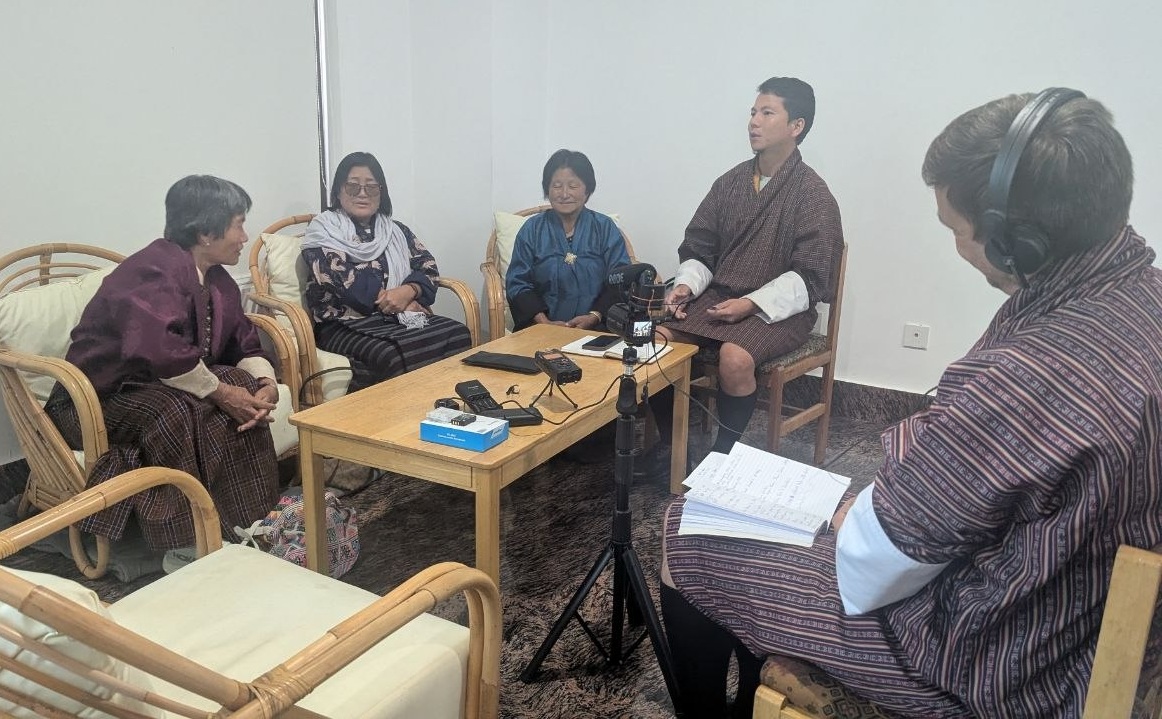
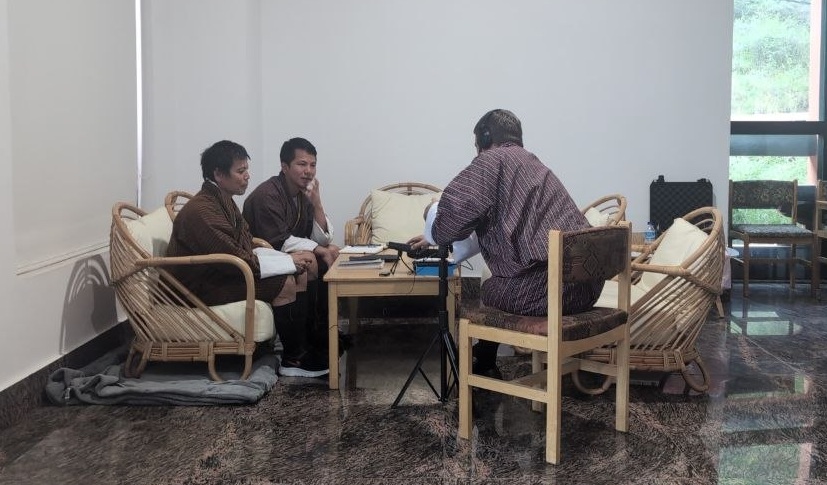
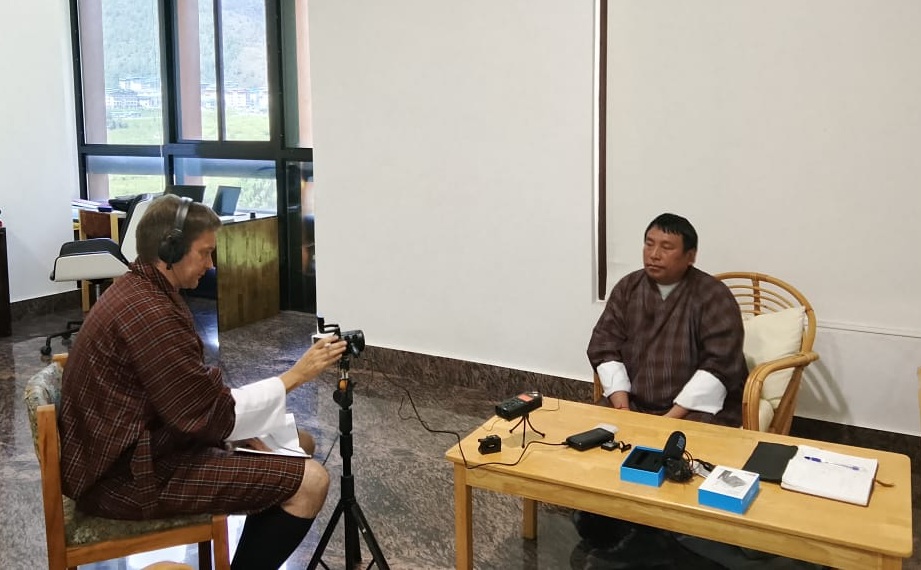
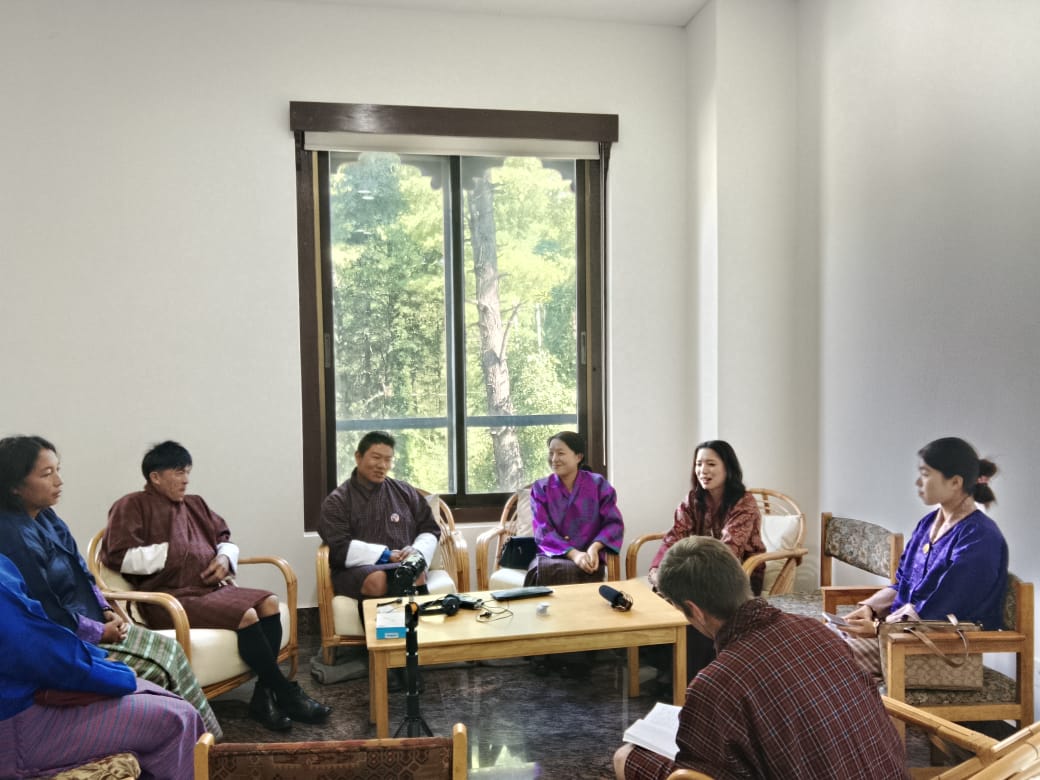
Here are some photographs from the Gongduk documentation sessions in Thimphu.

Group elicitation session with Gongduk speakers
Eliciting verbal agreement with Dorji Dema (64), Tshewang Lhamo (49) and Sangay Lhamo (60), originally from Daksa and Gungdu.
Recording narratives with a Gongduk speaker
Recording narratives from Tshewang Gyeltshen (64), originally from Bakla.
Individual narrative recording session
Recording narratives from Rinchen Wangdi (57), originally from Bogarbi.
Group discussion with Gongduk speakers
Holding a discussion with speakers in their 20s and 30s originally from Daksa, Miden, Bangbangla, Bakla, Weringla and Gungdu villages.

Lo-Rig PI Presents at Metagram Seminar Series

08 September 2026

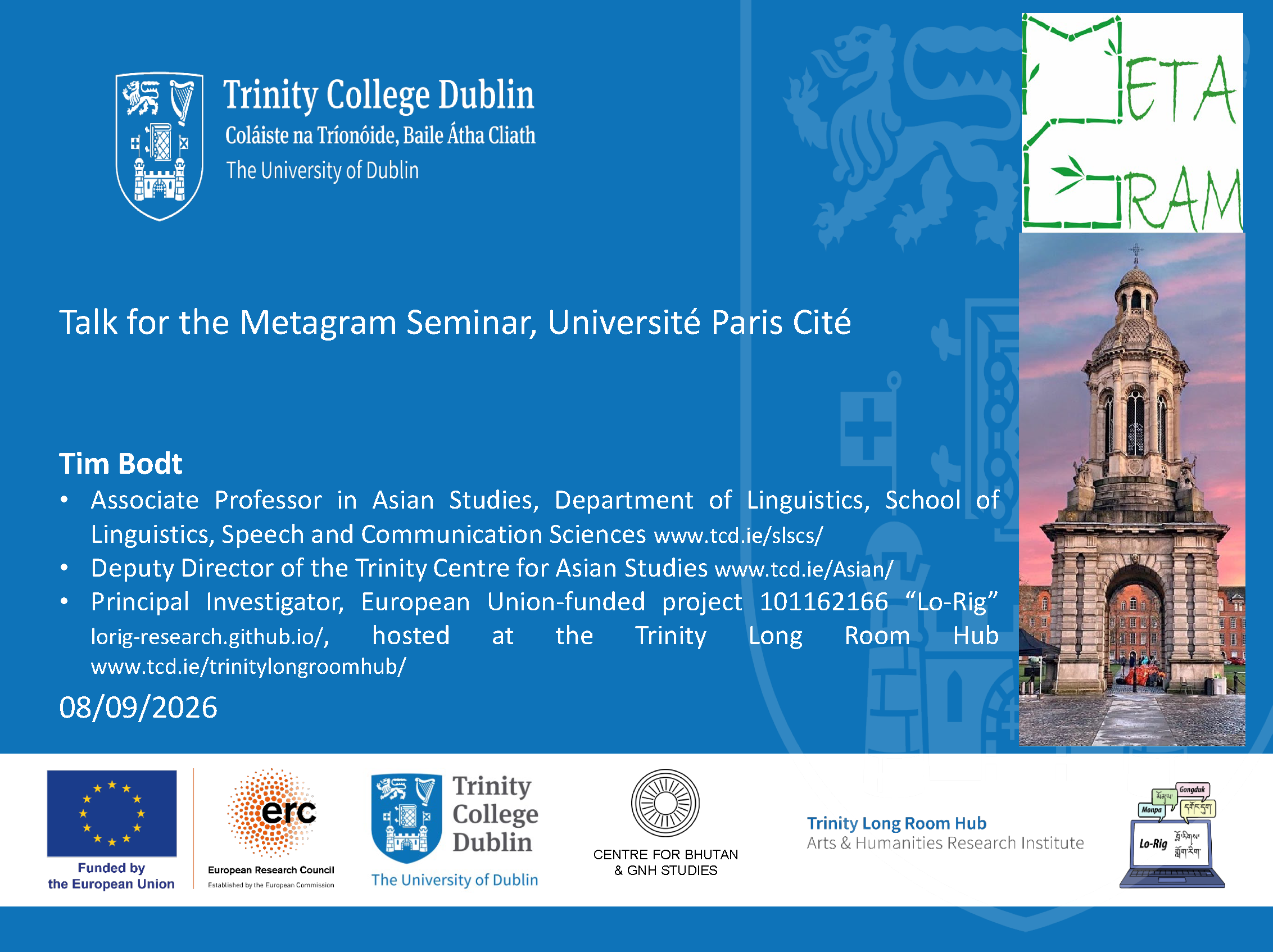
On the invitation of Aimée Lahaussois, Lo-Rig Principal Investigator Tim Bodt presented a talk on grammar writing at the Metagram seminar series on 8 September 2026. The seminar series is organised by Aimée Lahaussois and Yvonne Treis and Tim's presentation was attended by 40 students and researchers from across the globe with an interest in language documentation and description.

Presentation Slide Title Page

Presentation Slide Title Page

More information is available through the following links:

Language Documentation Summer School in Berlin

31 August 2026

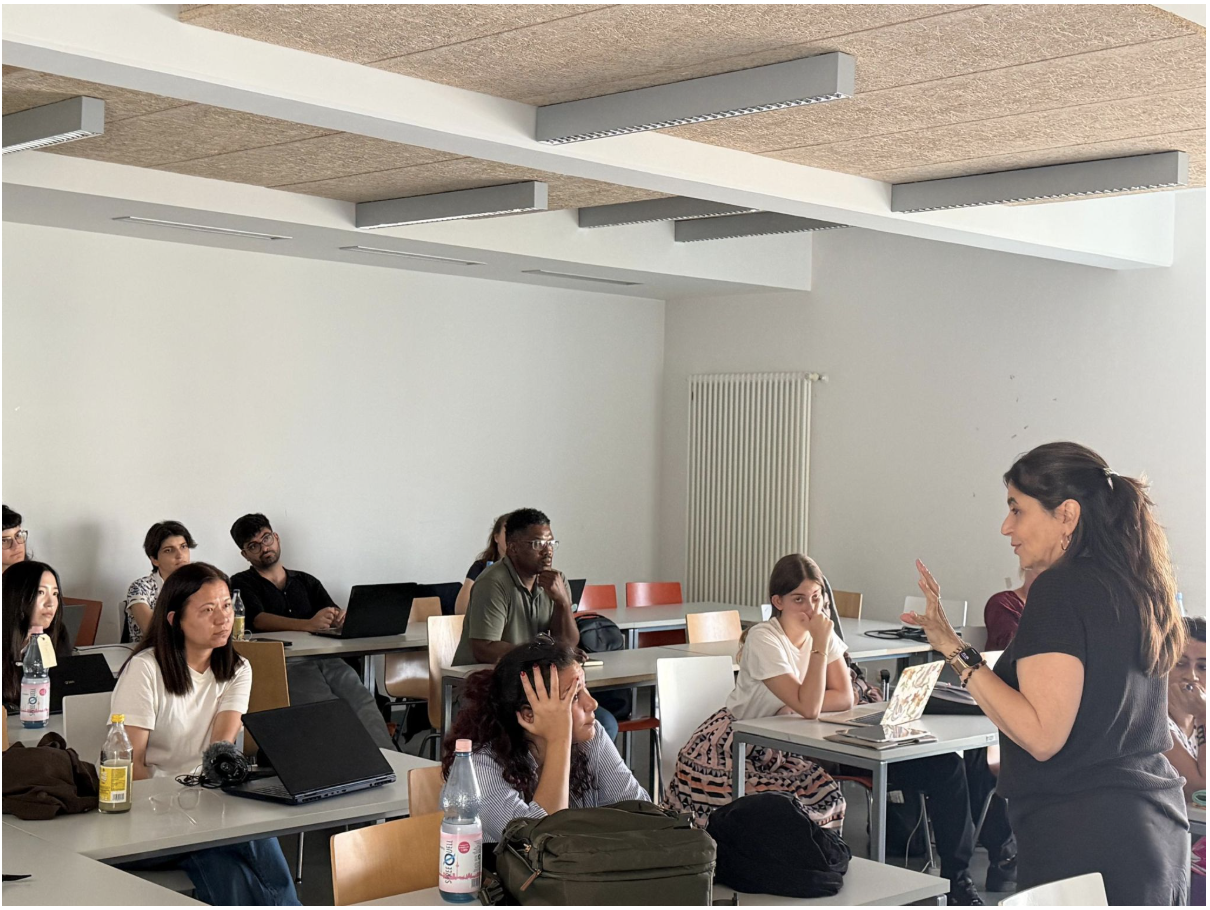
From 31 August to 4 September 2026, Tshering Om Tamang participated in the 2026 Summer School “Language Science Meets Linguistic Diversity” at Humboldt-Universität zu Berlin, Germany. The week-long summer school was jointly organised by the Endangered Languages Archive (ELAR), Humboldt-Universität zu Berlin, and the Leibniz-Zentrum Allgemeine Sprachwissenschaft (ZAS).

Summer School in Linguistic Diversity and Language Science

Summer School in Linguistic Diversity and Language Science

Tshering attended three courses: Digital Tools for Annotation and Analysis of Language Documentation Data (ELAN, FLEx), Data Management and Metadata Creation for Archiving in Language Documentation, and Capturing Language Use. The courses combined theoretical sessions with intensive practical work, covering the use of ELAN and FLEx for transcription, annotation, and corpus development; approaches to organising, managing, documenting, and archiving language documentation materials; and hands-on work with audio and video recording equipment for capturing language use. The recording sessions also included reviewing recordings and considering how different equipment and recording approaches affect the quality of the data collected.

The training is particularly relevant to Tshering’s upcoming fieldwork in Bhutan, where she will travel to Cungseng and Riti to collect linguistic data for the documentation and grammatical analysis of Monkha. The skills gained in the summer school will support the recording of audio and video data in the field and the subsequent processing, annotation, organisation, and archiving of the materials.

The summer school also provided Tshering with an opportunity to meet researchers working on language documentation and linguistic diversity across a range of linguistic contexts, and to exchange practical approaches to documenting, analysing, and preserving endangered and under-resourced languages.

Kuensel Reports on Access Challenges Affecting Riti and Jigmecholing

22 July 2026

Recent reporting in Kuensel, Bhutan's national newspaper, has highlighted the infrastructure challenges affecting access to Jigmecholing and nearby Monpa communities during the monsoon season.

On 12 July 2026, the bridge providing access to the Monpa village of Riti, referred to as Ritey in the Kuensel article, was washed away by flooding caused by heavy monsoon rain. A temporary footbridge was later constructed, but the article reports continued concerns among residents about the need for a more durable bridge.

A second Kuensel article, published on 15 July 2026, reported on difficult road conditions along the Gelephu–Trongsa highway, especially around the landslide-prone Boxcut area. Jigmecholing serves as an important access point to the Monpa villages of Riti and Cungseng, where Lo-Rig project member Tshering Om Tamang conducts linguistic fieldwork.

These reports help illustrate the precarious infrastructure connecting remote communities in Bhutan and the practical challenges involved in conducting linguistic fieldwork in such areas.

The articles are available online through Kuensel:

Lo-Rig Project Mentioned in Kuensel Article on Gongdue Kha

04 July 2026

The Lo-Rig project was mentioned in a recent article in Kuensel, Bhutan's national newspaper, titled "Gongdue Kha going extinct in Mongar". The article discusses the endangered status of Gongdue Kha and highlights current efforts to document and preserve the language. The Lo-Rig project is mentioned as part of these ongoing documentation efforts.

This media coverage helps draw attention to the urgency of language documentation work in Bhutan and to the importance of sustained collaboration with speaker communities in documenting, preserving, and promoting endangered languages.

The article is available online through Kuensel:

Read the article on Kuensel Online

A PDF copy of the print article is also available here:

Download the Kuensel article PDF

Class on Proto-(Western-)Kho-Bwa Reconstruction at the Second Summer School for Ancient Trans-Himalayan Languages

15–27 June 2026

Between 15 and 27 June 2026, Lo-Rig Principal Investigator Tim Bodt taught a class on "Reconstruction of Proto-(Western-)Kho-Bwa" at the Second Summer School for Ancient Trans-Himalayan Languages, organised by the Trinity Centre for Asian Studies at Trinity College Dublin.

The class worked with primary data on Bugun and showed how such linguistic data can be used to reconstruct a proto-language and compare these data with other, presumably related languages. The class included two practical sessions and was attended by around 40 on-site and online participants.

More information about the 2026 Summer School is available on the Trinity Centre for Asian Studies website:

2026 Summer School for Ancient Trans-Himalayan Languages

Applications Open for the First Lo-Rig Language Documentation and Description Workshop

05 June 2026

Banner for the first Lo-Rig Language Documentation and Description Workshop

Official banner for the first Lo-Rig Language Documentation and Description Workshop, "Linguistic Fieldwork", to be held in Thimphu from 30 November to 06 December 2026.

Workshop details

Title: Language Documentation and Description Workshop 1: Linguistic Fieldwork
Dates: 30 November – 06 December 2026
Location: Centre for Bhutan and GNH Studies, Langjopakha, Thimphu, Bhutan
Application deadline: 15 August 2026

Download the full announcement PDF

The Lo-Rig project, in cooperation with the Centre for Bhutan and GNH Studies (CBS), is pleased to announce its first annual Language Documentation and Description Workshop. The first workshop, titled "Linguistic Fieldwork", will take place at CBS in Langjopakha, Thimphu, Bhutan, from 30 November to 06 December 2026.

This workshop is the first in a planned series of three annual workshops organised by the Lo-Rig project. The series aims to support language documentation and description work by bringing together community linguists, researchers, teachers, cultural officers, language advocates, and others interested in linguistic research and language preservation.

The first workshop will focus on linguistic fieldwork, including data collection, research ethics, recording practices, data storage, phonetics and phonology, orthographies, and the International Phonetic Alphabet (IPA).

Applications are open to participants from Bhutan, India, Nepal, Bangladesh, and Pakistan. The application deadline is 15 August 2026, with acceptance communicated by 15 September 2026.

For full details, including eligibility, funding support, workshop planning, and application information, please see the official announcement:

Download the workshop announcement PDF