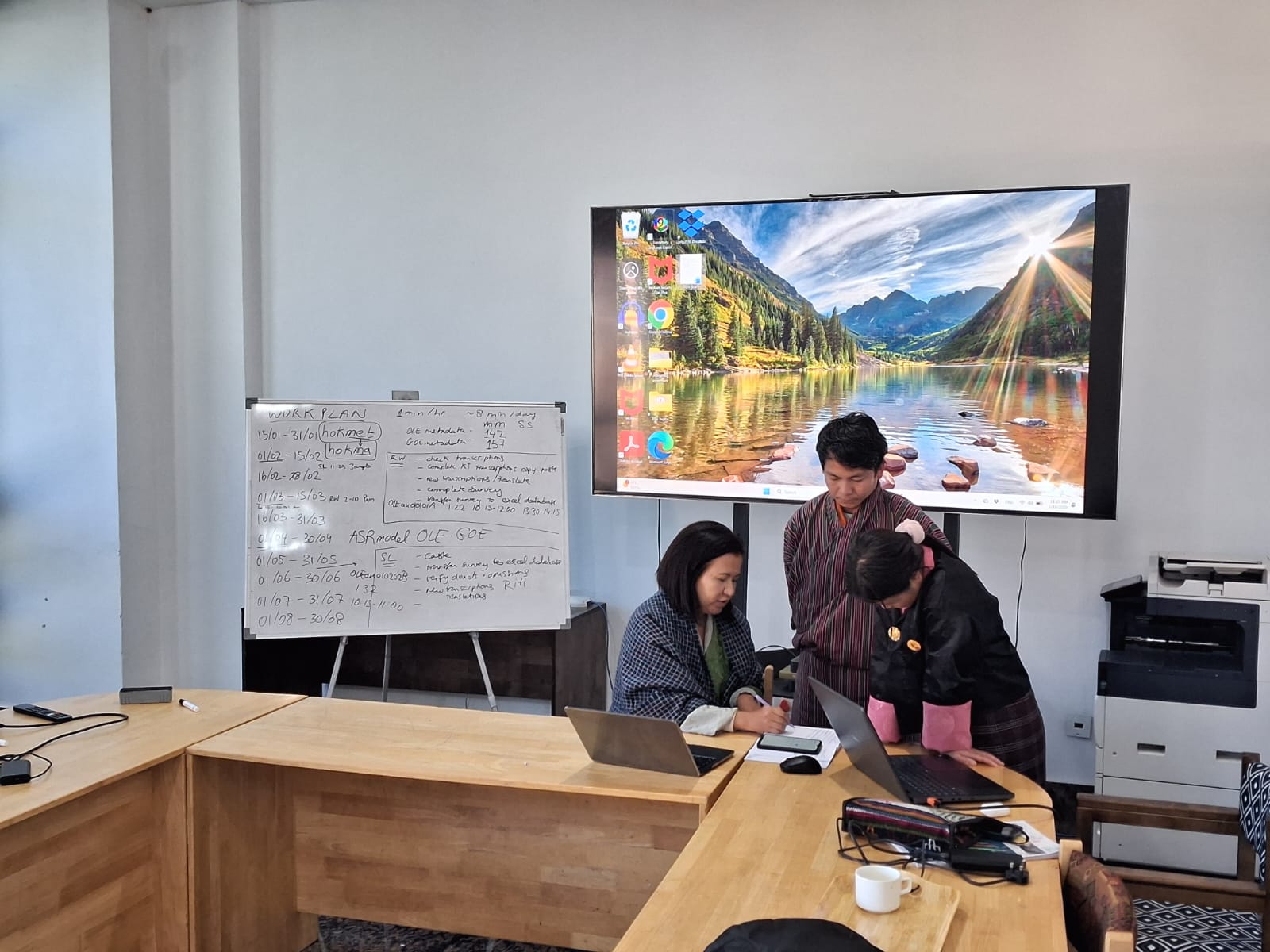
Applications Open for the First Lo-Rig Language Documentation and Description Workshop
05 June 2026
Workshop details
Title: Language Documentation and Description Workshop 1: Linguistic Fieldwork
Dates: 30 November – 06 December 2026
Location: Centre for Bhutan and GNH Studies, Langjopakha, Thimphu, Bhutan
Application deadline: 15 August 2026
The Lo-Rig project, in cooperation with the Centre for Bhutan and GNH Studies (CBS), is pleased to announce its first annual Language Documentation and Description Workshop. The first workshop, titled "Linguistic Fieldwork", will take place at CBS in Langjopakha, Thimphu, Bhutan, from 30 November to 06 December 2026.
This workshop is the first in a planned series of three annual workshops organised by the Lo-Rig project. The series aims to support language documentation and description work by bringing together community linguists, researchers, teachers, cultural officers, language advocates, and others interested in linguistic research and language preservation.
The first workshop will focus on linguistic fieldwork, including data collection, research ethics, recording practices, data storage, phonetics and phonology, orthographies, and the International Phonetic Alphabet (IPA).
Applications are open to participants from Bhutan, India, Nepal, Bangladesh, and Pakistan. The application deadline is 15 August 2026, with acceptance communicated by 15 September 2026.
For full details, including eligibility, funding support, workshop planning, and application information, please see the official announcement: