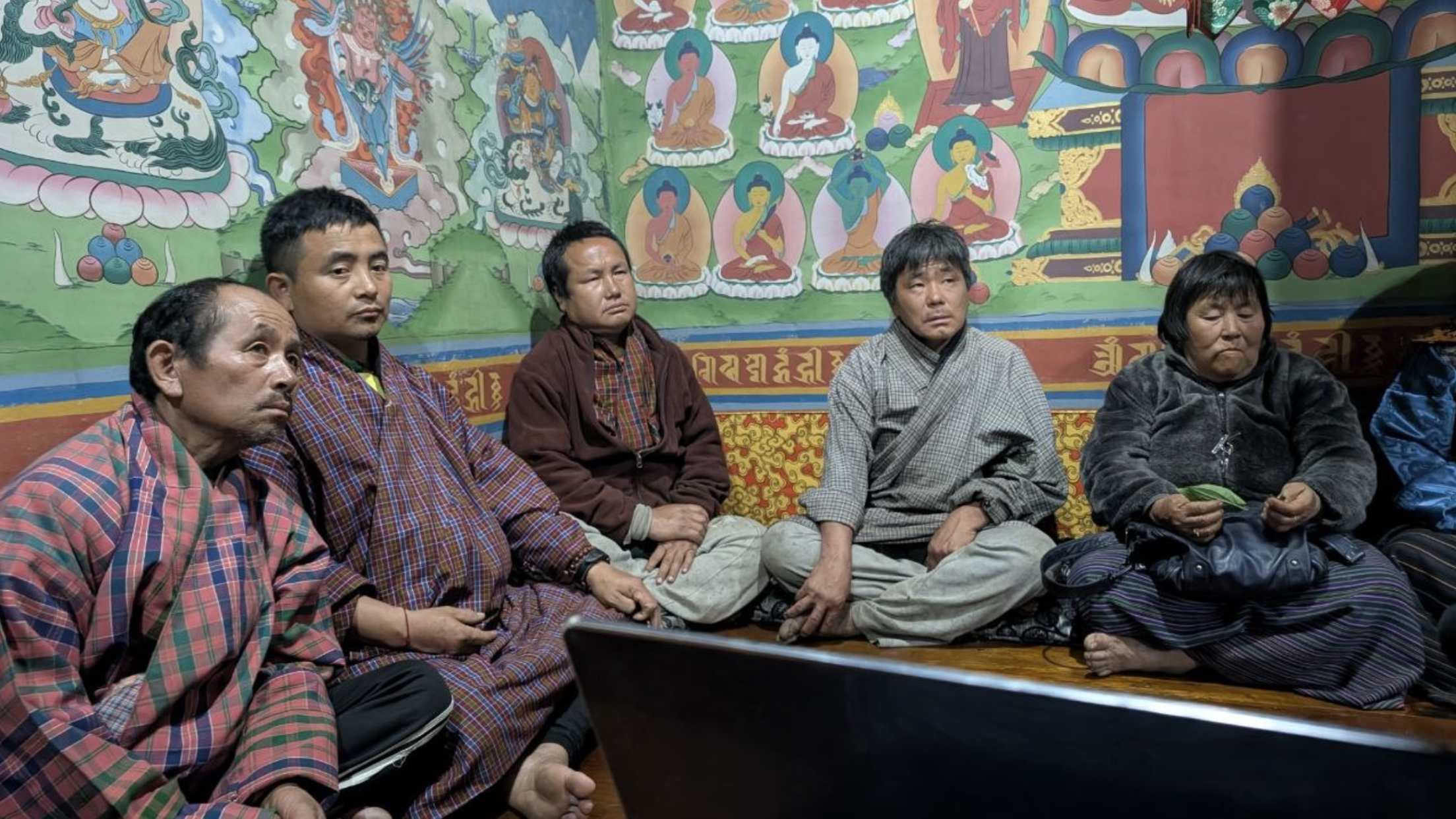
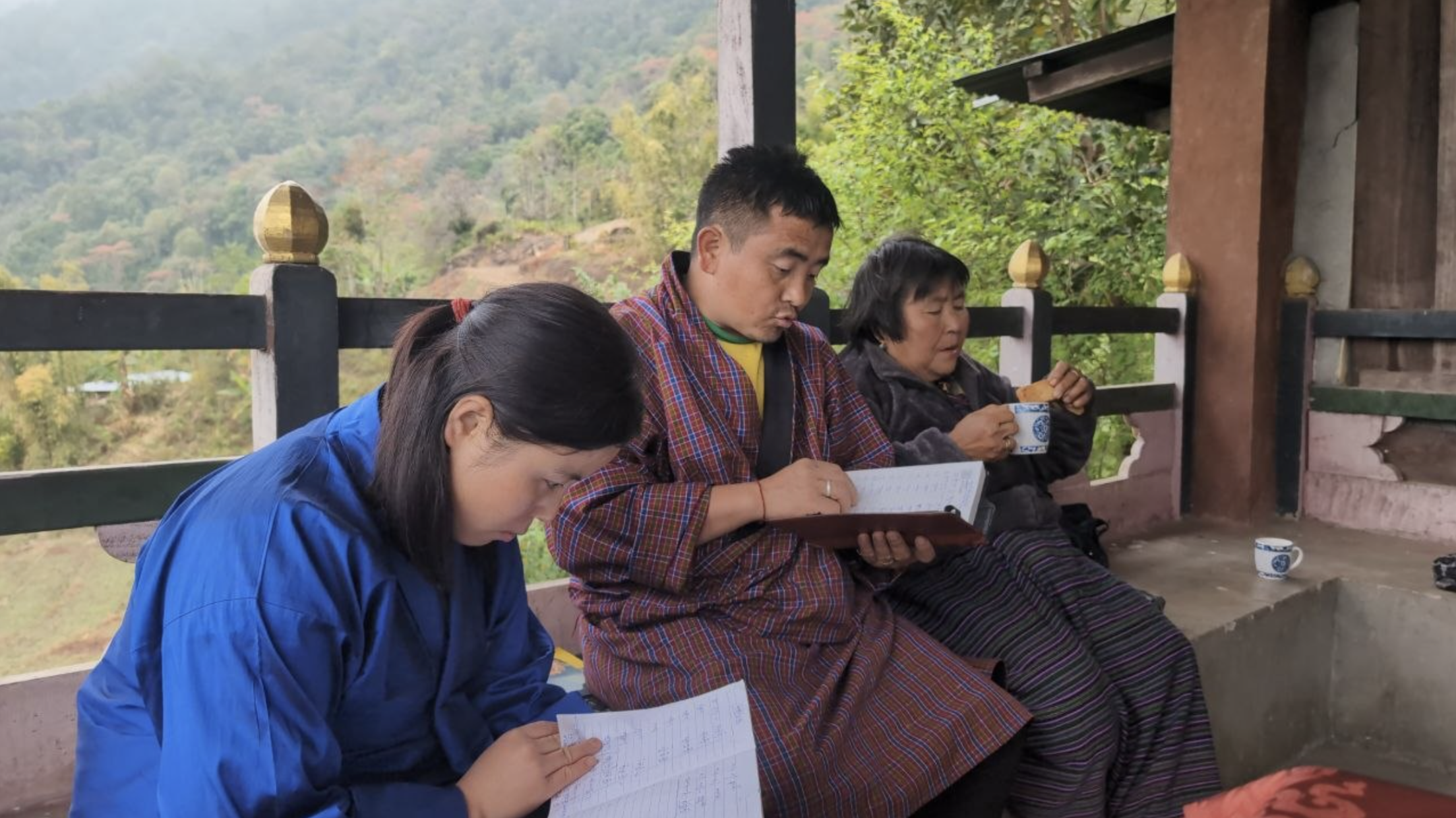
Between 13th and 17th March 2026, Ms Tshering Om Tamang and Sonam Lhamo visited Chungseng village to carry out fieldwork on the Monkha language.
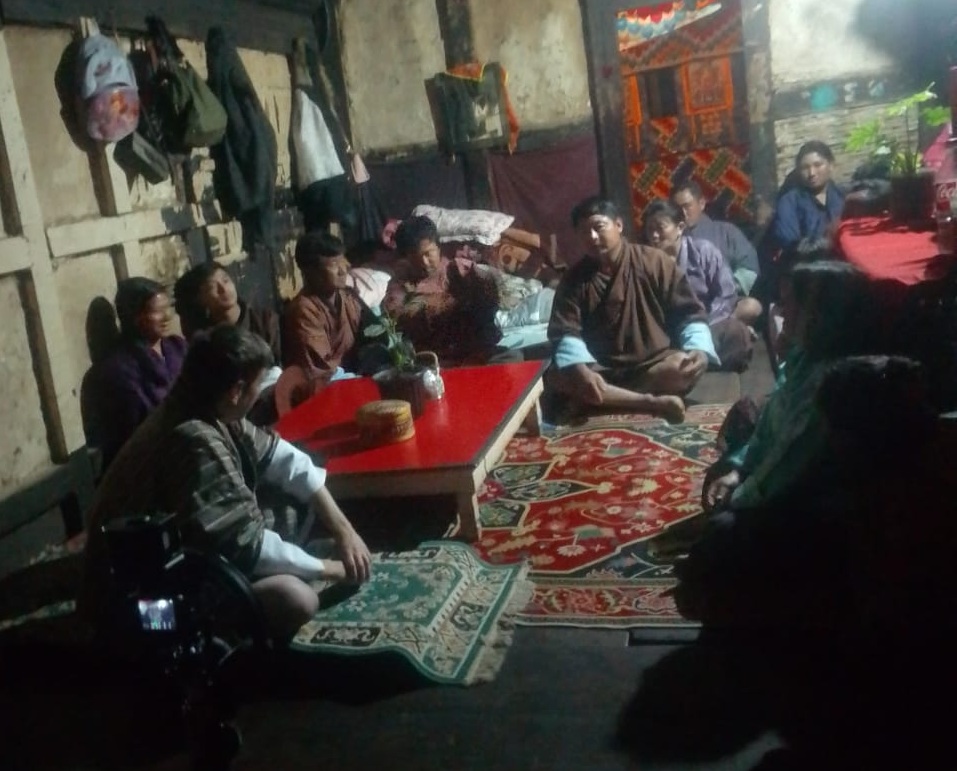
During the visit, the researchers collected primary data on local language use and community perspectives. An important activity was a community meeting, where the team introduced the aims and scope of the Lo Rig Project, with particular focus on documenting Monkha language. Following the presentation, community members shared their knowledge, experiences, and perspectives on language preservation.
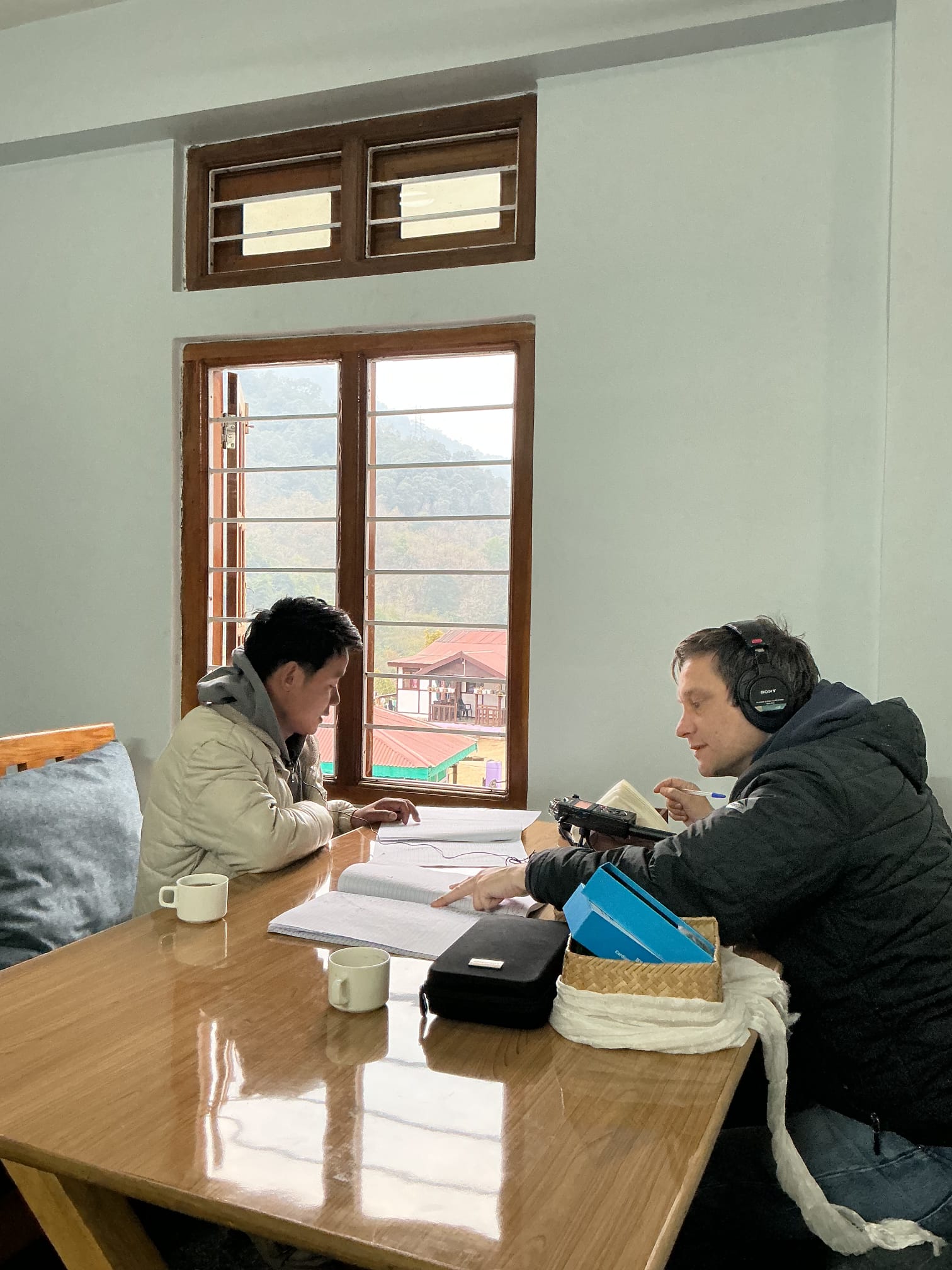
Alongside the meeting, Ms Tshering and Sonam Lhamo collected language samples from speakers in the village. They recorded natural conversations and oral narratives to capture everyday speech and elicited word lists to document the vocabulary of the Monkha language. These focused efforts aimed to provide an accurate record of authentic language use to support ongoing documentation and preservation of Monkha.
Community members attending a meeting in Chungseng village (March 2026).
Fieldwork data collection session in Chungseng village (March 2026).
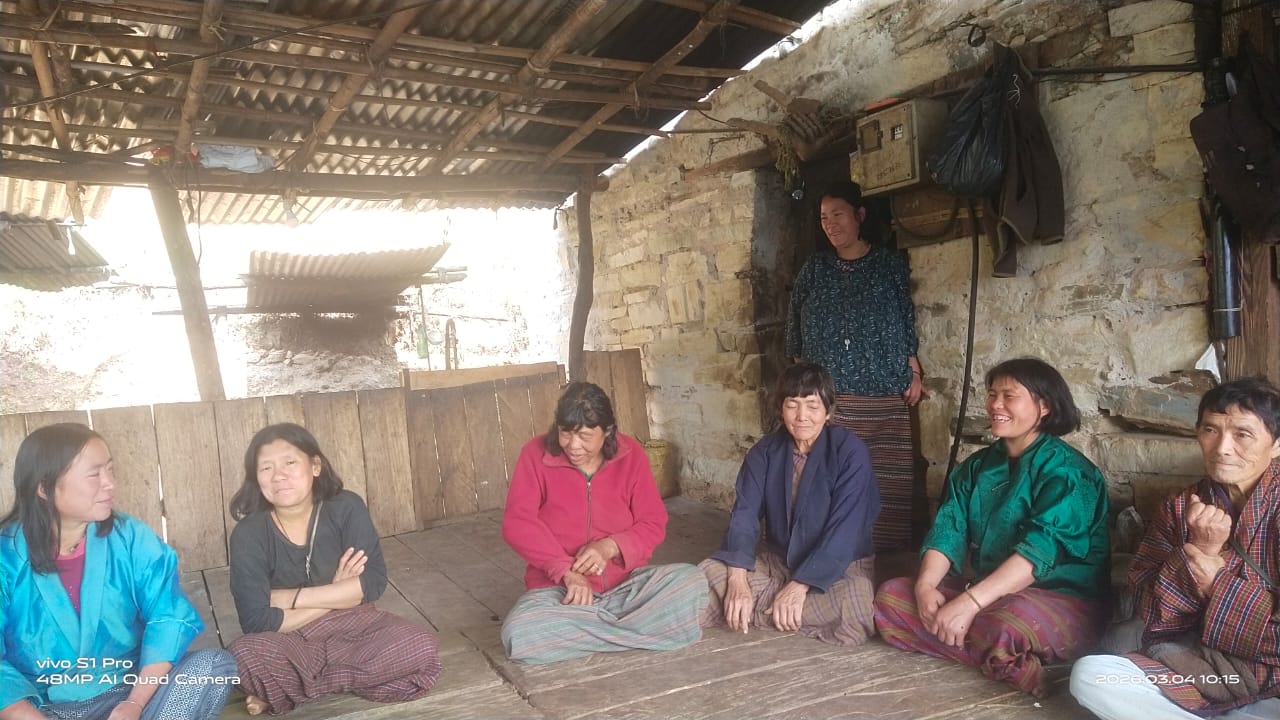
Rinchen visited the remote Gongduk communities of Pam, Caibi and Miden, where he introduced the Lo-Rig project, held consultations with community members, and conducted the sociolinguistic survey.
Due to the lack of a guide, he was unable to visit Bangbangla, possibly the most remote Gongduk village. A future visit is planned for autumn 2026.
People from Miden village attending the consultative meeting about the Lo-Rig project (March 2026).
Sonam travelled to Trongsa district to conduct fieldwork among the speakers of Monkha in the villages of Phuzur (her home village), Jangbi, and Wangling.
During the visit, she completed the sociolinguistic survey of all households in these villages. She also interacted with Pamo Dorjimo, one of the two remaining Pamo (female "Bon" or pre-Buddhist practitioners) in the villages. Pamo Dorjimo provided detailed information on the various patrilineal clans (or "castes") that were once found among the Monpa people and which of these clans still exist today. Sonam also clarified several outstanding questions concerning the transcription and translation of earlier recordings.
From 18 February onwards, Sonam joined the Monpa community in celebrating Dawa Dangpai Losar, the traditional New Year celebration, which lasts several days. During the daytime, men play khuru (darts) and degor (stone put). At the same time, groups of women conduct changkor: they visit every household, sing traditional songs, and are then served ara, singchang, and bangchang, local alcoholic drinks, in return. In the evening, it is the men’s turn to perform changkor.
During Losar, the main meals of the day are taken together.
On 30 January 2026, Tim visited New Kaspi village in Singchung circle, where he met with Mr. Sani Bachung, a speaker of Bugun.
The visit formed part of the preparations for the Summer School on Ancient Trans-Himalayan Languages, organised by the Trinity Centre for Asian Studies in June 2026. Discussions focused on the structure and distinctive features of the Bugun language, as well as topics relevant to historical-comparative research in the region.
Sani Bachung enlightening Tim about the intricacies of the Bugun language (January 2026).
Between 06 and 12 December 2025, the Gongduk Research Assistant Rinchen visited Daksa village under Gongdue block, Mongar district, where he attended and documented the Kharphu festival.
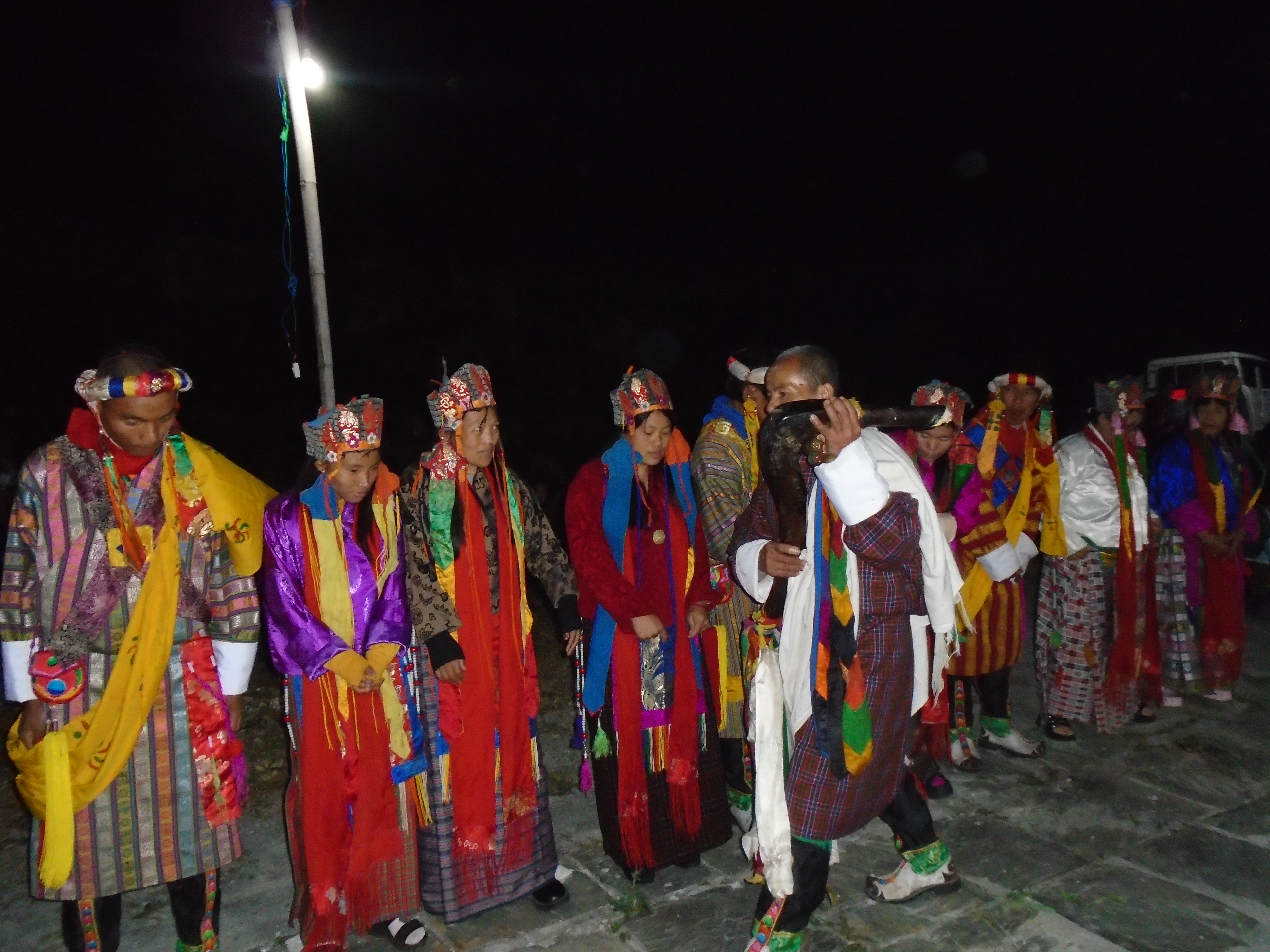
Bopa (male) and boma (female) dancers participating in the Kharphu festival in Daksa village, Mongar district, December 2025.
Between 27 October and 01 November 2025, the project PI Tim and the Monkha Research Assistant Sonam visited the village of Riti under Jigmechoeling block, Sarpang district. Riti is located 88 kilometres from Gelephu city. The road is only partially paved, and the journey can take between six and ten hours depending on road conditions, with roadblocks frequently occurring, in particular at a location known as Boxcut on the Gelephu–Zhemgang highway.
Riti village was established approximately 80 years ago by Monpa people who migrated from Rukha village in Wangdue Phodrang district. The Monkha varieties spoken in Rukha and Riti are very similar. The inhabitants of Riti depend almost entirely on large cardamom as a cash crop.
In Riti, Sonam and Tim conducted an awareness session with a representative from each of the 15 Monpa households. During this session, they explained the purpose of the Lo-Rig project and its goals and objectives. Community members were asked for their understanding of and permission for the research and were given the opportunity to ask questions or raise concerns.
Explaining the goals of the Lo-Rig project and its procedures to representatives from all the Monpa households in Riti village (October 2025).
Several community members noted that on previous occasions Western, Japanese, and Bhutanese researchers had visited their village, asked questions about their language, made recordings, took notes, and in some cases even drew blood. However, no results, books, or other outcomes were ever shared with the community, which had led to considerable disappointment. Sonam and Tim assured the community that the Lo-Rig project would strive to produce tangible outcomes that would also be shared with them, which was received positively by the assembled participants.
Subsequently, Sonam and Tim made recordings of narratives provided by the two most senior community members, Ap Singye and Ap Tandin. They also recorded a wordlist from Tenzin and Peday.
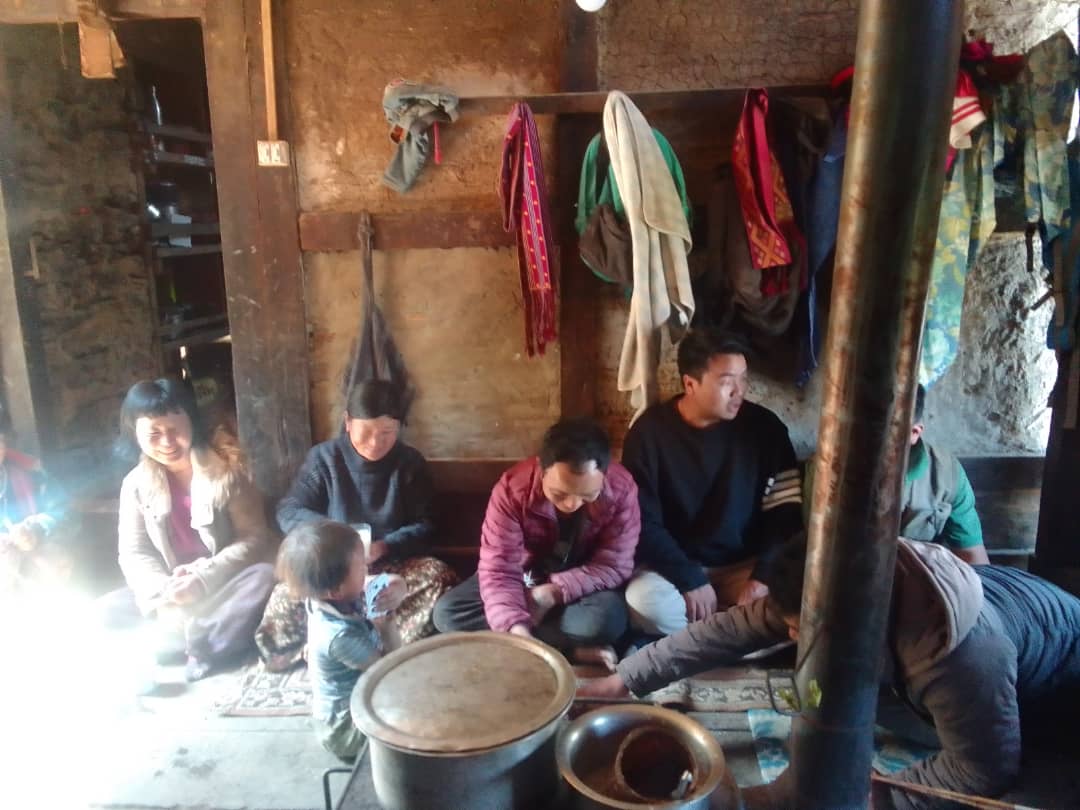
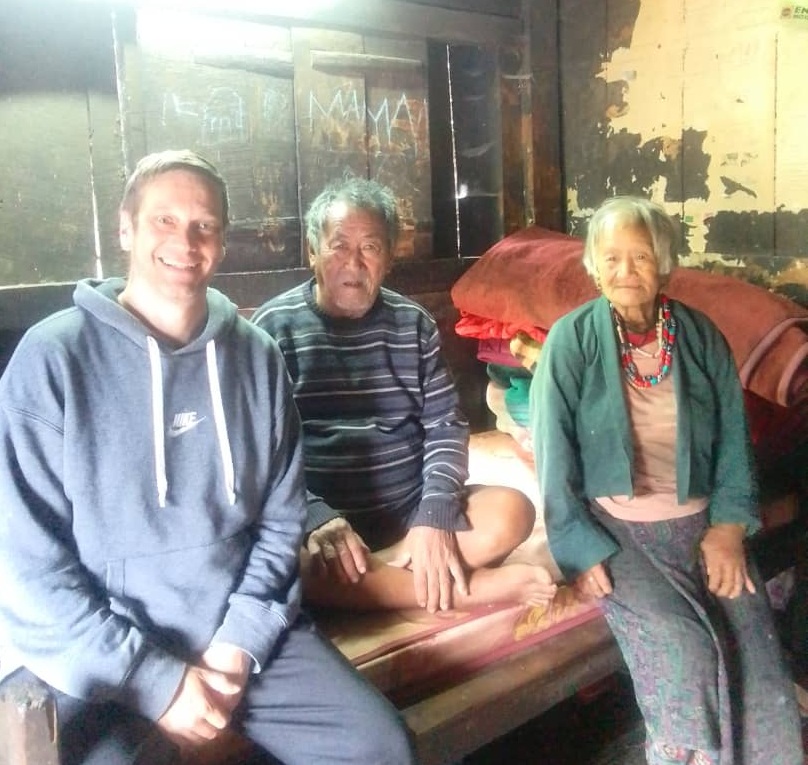
Octogenarians Ap Singye and Am Benze of Riti village (October 2025).