Skip to content

Fieldwork and Communities

Gongduk Data Collection in the Field

18 November 2026

After successfully recording Gongduk speakers living in Thimphu, the PI Tim and RA Rinchen have been conducting fieldwork in Gongdue gewog (block) of Mongar dzongkhag (district) in eastern Bhutan, the traditional home of the Gongduk people.
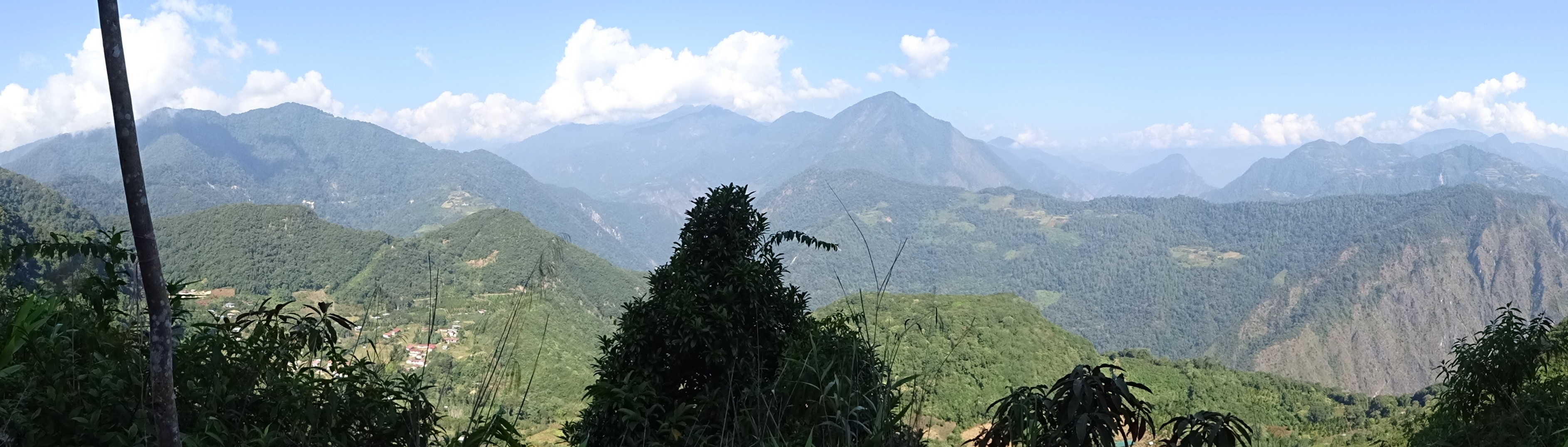
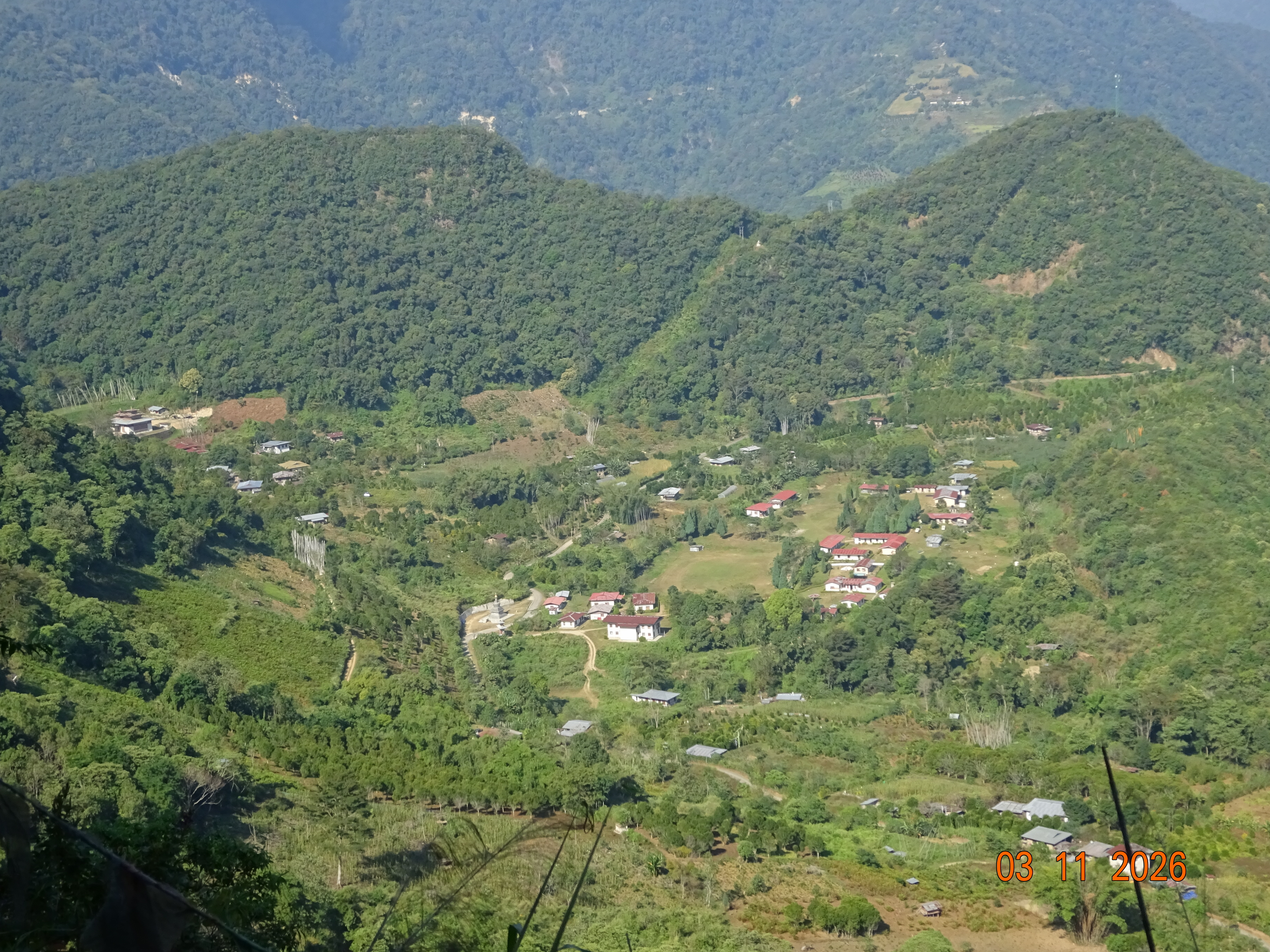
Panoramic view of the mountainous Gongduk speech area
Overview of the Gongduk speech area.

Community consultations and recordings

Tim and Rinchen traveled widely across the gewog, visiting the villages of Pangthang, Gongde, Toekor, Damkhar, Domong, Salibi, Tshabor, Phosala, Midan, Pam, Gorthongla, Gongdu, Daksa, Pikari, Bakla and Idi. In each village, they held a group consultation meeting and obtained community consent for data collection, archiving and publication as per the prescribed protocol. They also updated the sociolinguistic survey of the Gongduk-speaking population.

They then mainly recorded the most elderly speakers, collecting a total of 14 1/2 hours of recordings of various genres. Nearly 2 hours are the recorded consent sessions; a little over 2 hours are elicitation of minimal pairs; almost 3 1/2 hours are discussions about livelihoods in past and present, including foraging, agriculture, domestic animals, wild animals and their impact on humans, climate change, and handicrafts; almost 1 hour consists of narratives such as fables and stories; 1/2 an hour consists of personal narratives and experiences; almost 1/2 an hour consists of discussions about the sociolinguistic status of Gongduk; and a little over 5 hours are historical narratives, including about local deities, religious practices and landmarks, the settlement history of the area, taxation in the past, etc. Some recordings are monologues, others are question-and-answer sessions, dialogues, and group discussions.
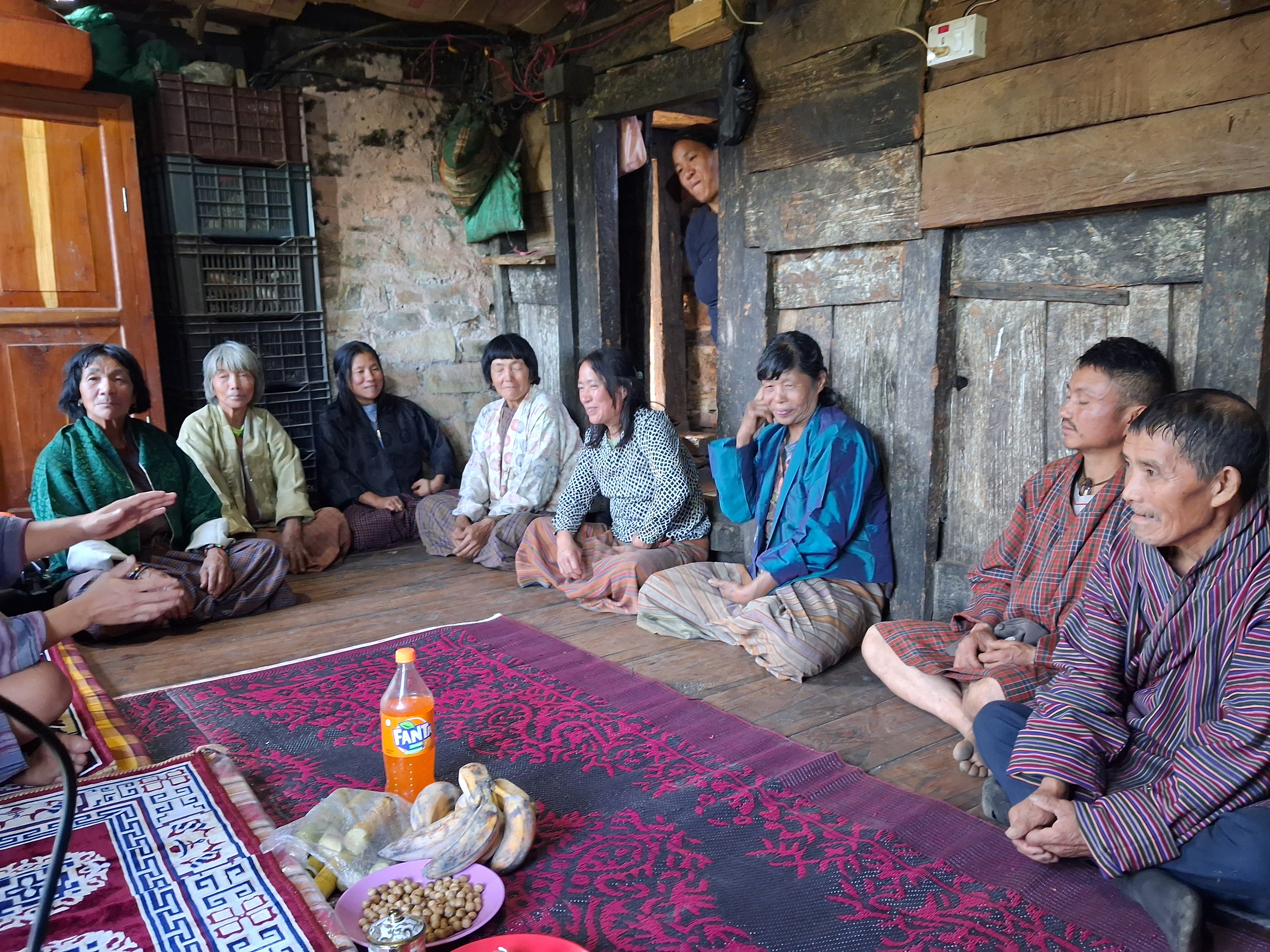
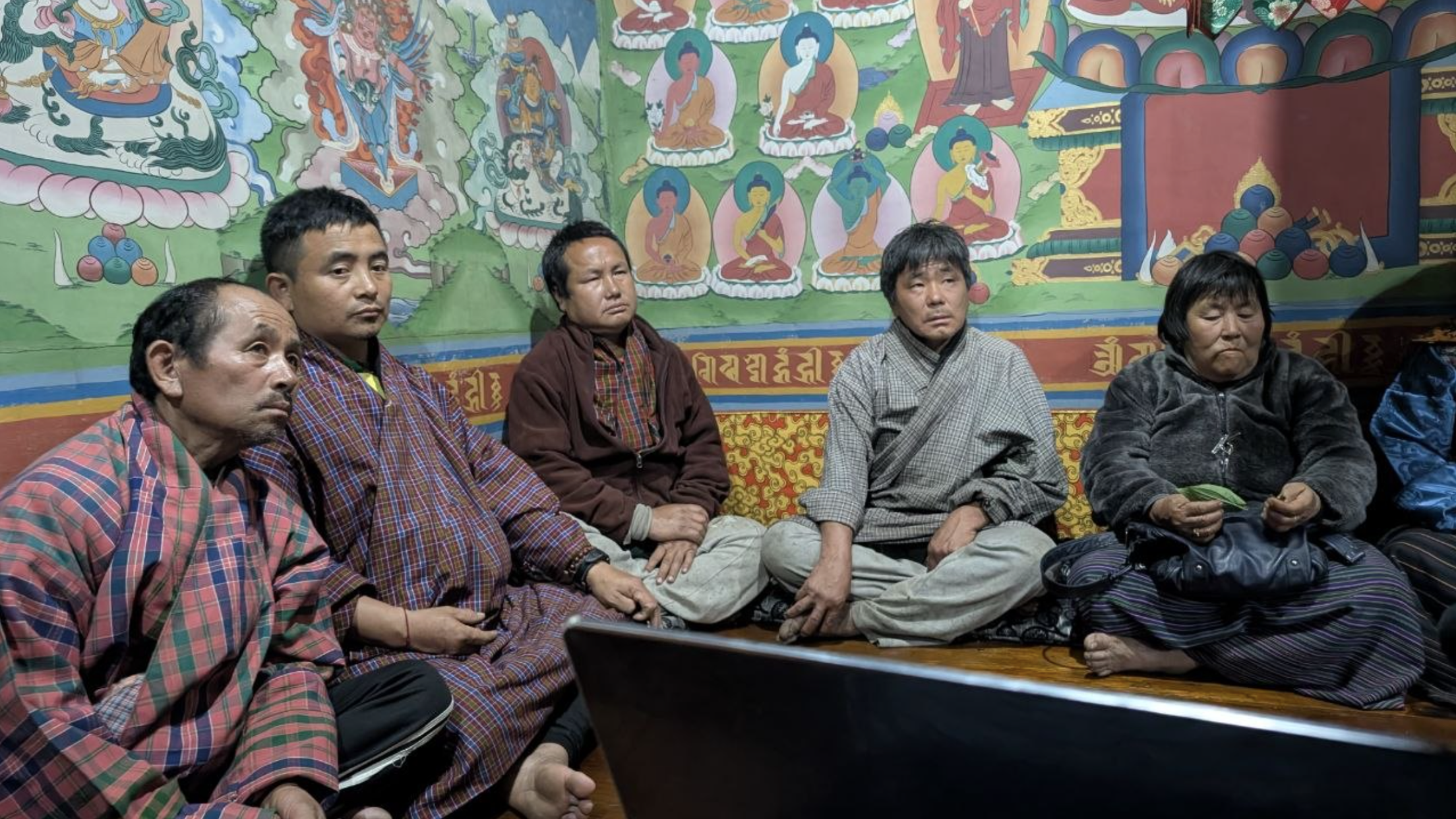
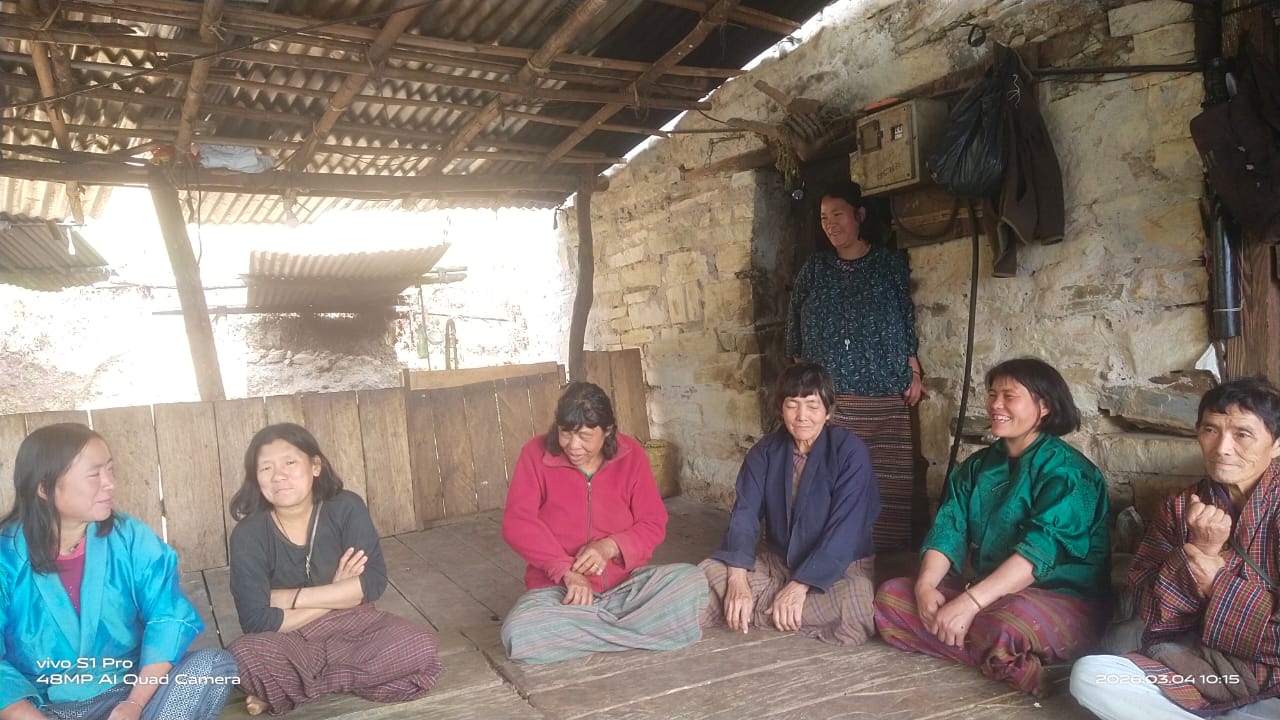
Community consultation with Gongduk speakers seated together in Midan village
Community consultation meeting in Midan village.
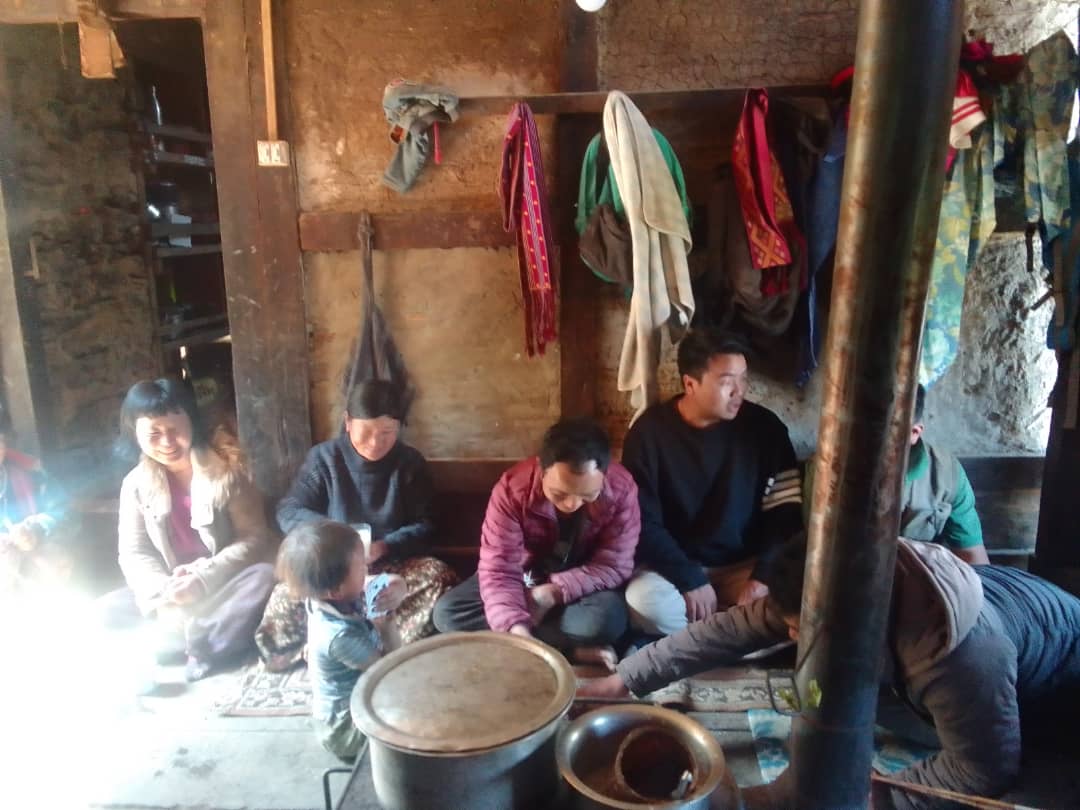
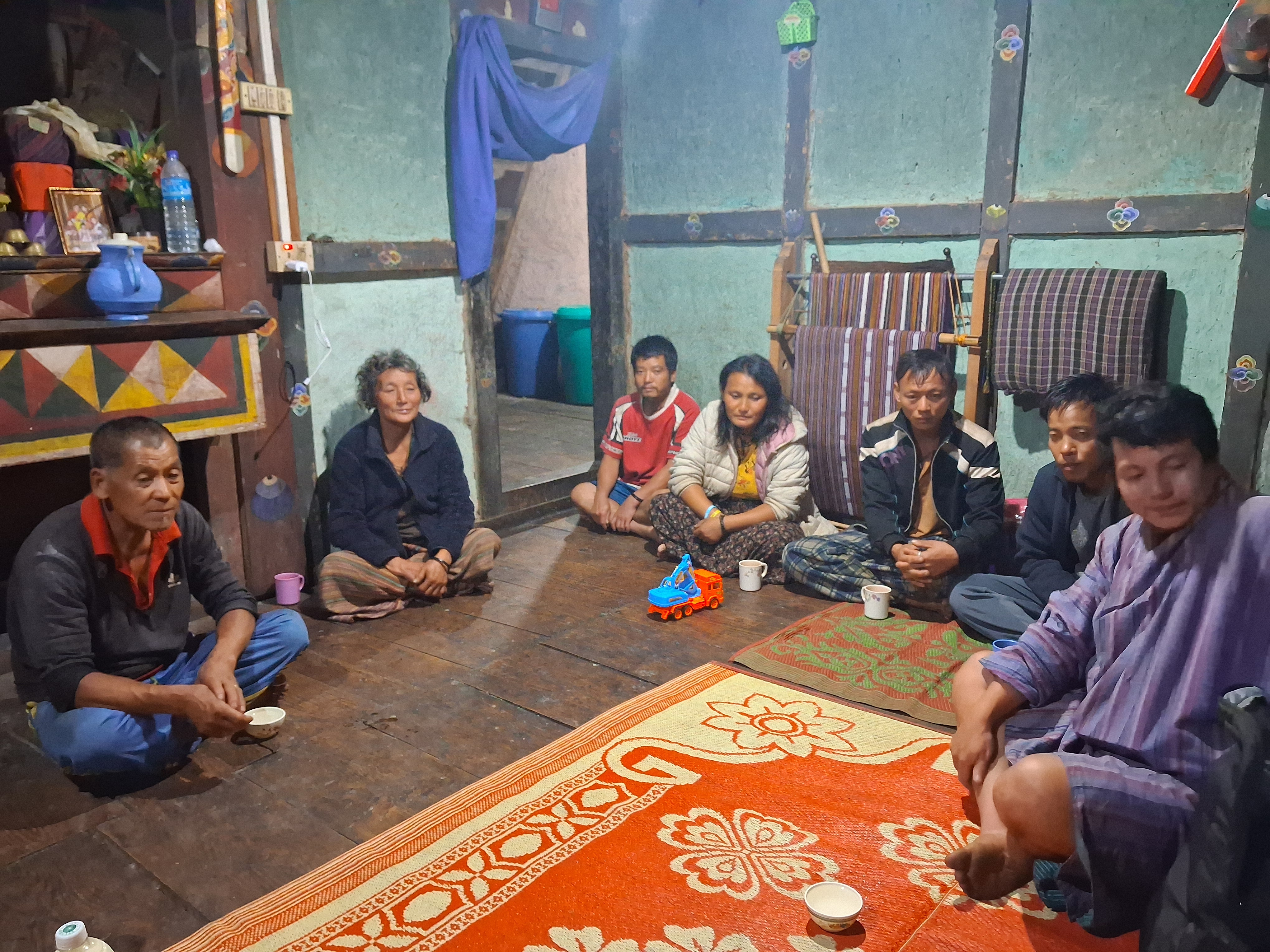
Community consultation with Gongduk speakers seated in a room in Pam village
Community consultation meeting in Pam village.
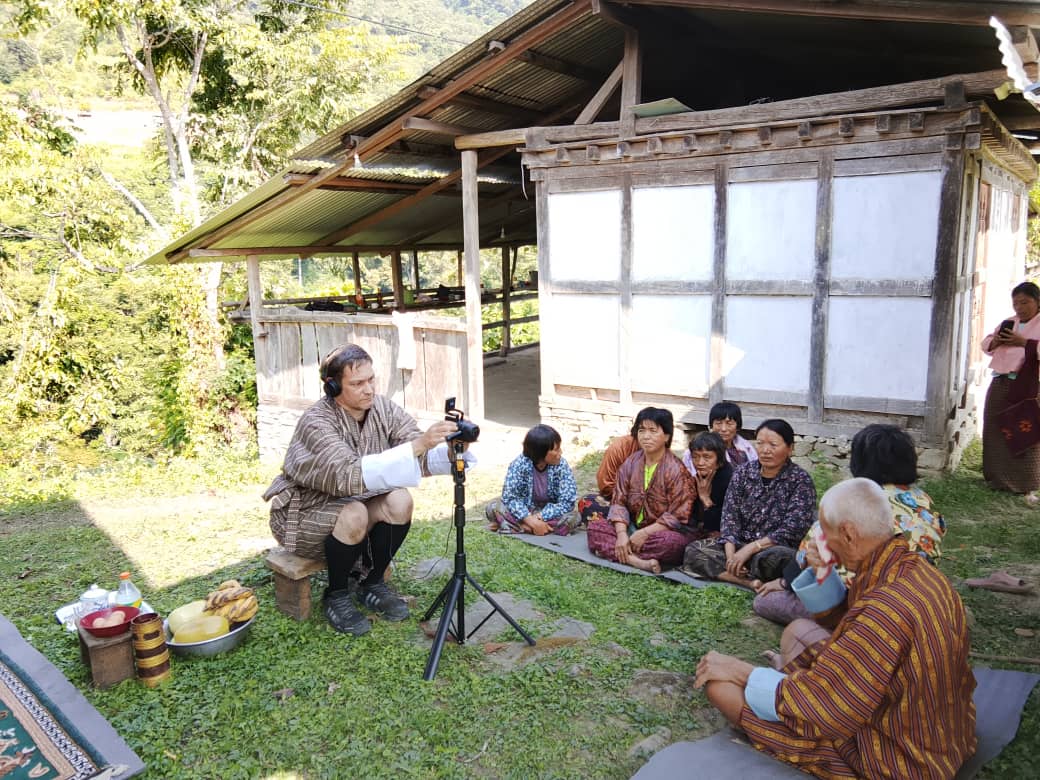
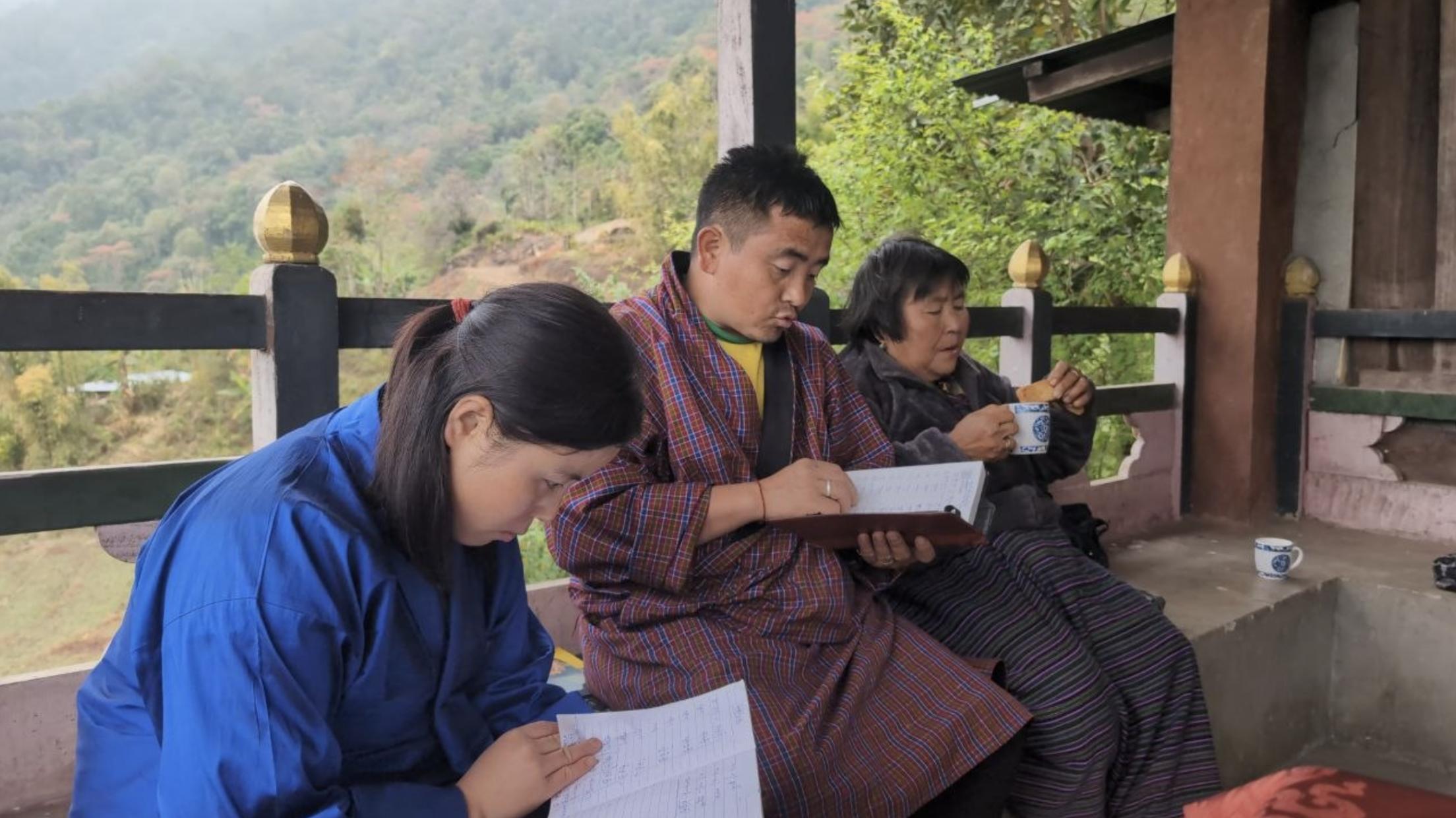
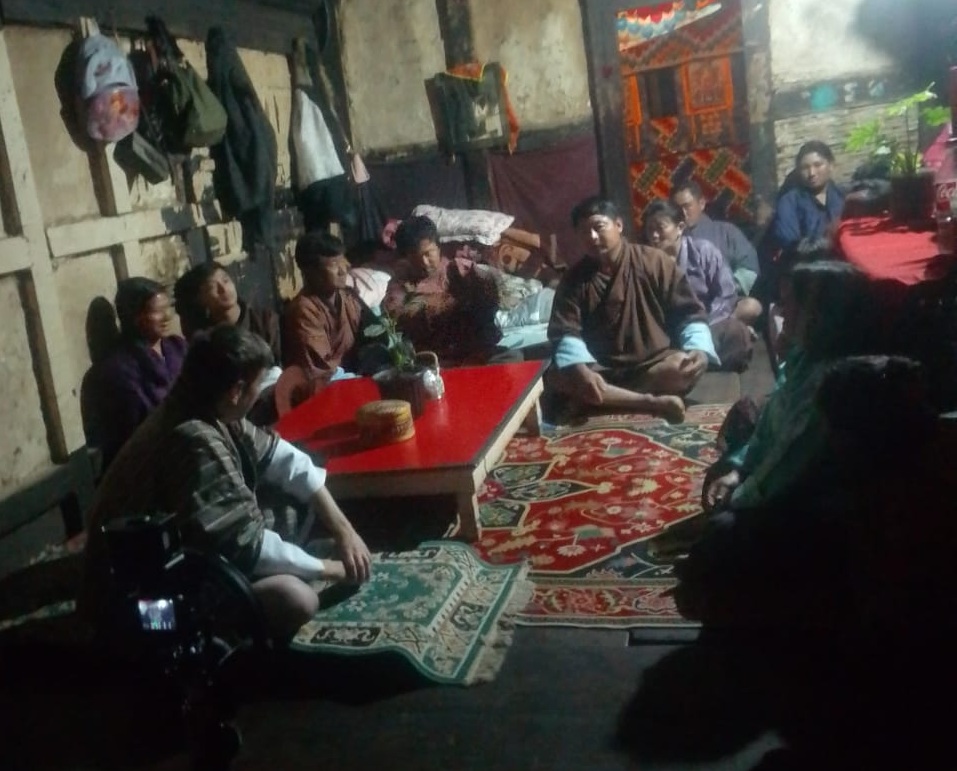
Recording session with community members seated outdoors in Damkhar village
Recording session at Damkhar village.
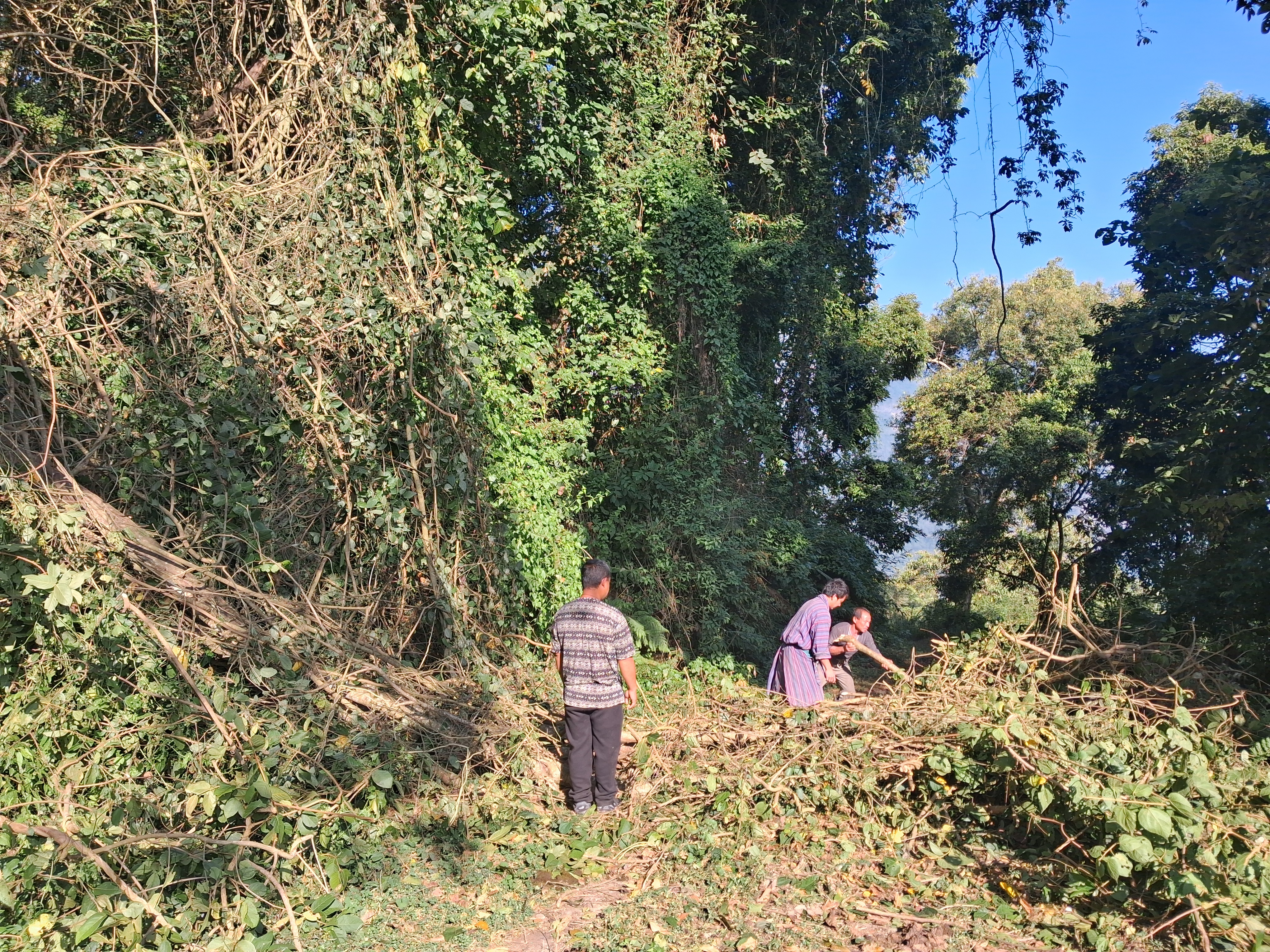
People clearing a fallen tree from a road surrounded by vegetation
Removing a tree that had fallen on the road between Pam and Gorthongla villages.

The community and language transmission

Tim and Rinchen consulted 32 females and 26 males, ranging in age from 33 to 88 years old, with the majority in their mid-fifties, sixties and early seventies. This age range reflects the average age of the population in the gewog, which has seen a massive outward migration of the educated population. The arrival of basic necessities, such as electricity, drinking water supply and roads, since 2015-2020 was too late to stem this migration, and education, health and extension facilities have since been reduced due to a lack of population and pupils.

In addition, historical inward migration in the Damkhar-Pangthang area has reduced the Gongduk-speaking population there, with many households shifting to Khengkha and Tshangla except for in Damkhar village itself.

This lack of a viable speaker community allowing the transmission of the language to the next generation was identified as the largest threat to the viability of Gongduk. Speakers observed that once people move out of Gongduk gewog, and once people marry people outside the Gongduk speech community, they cease to speak the language on a daily basis, and they do not transfer the language to their children.

With the 2,640 MW Kuri-Gongri hydroelectric project coming up in the Kuri-Gongri River, that flows to the East of Gongdue, the gewog is expected to witness further change soon. While the Yangbari-Tshobaley-Telung area will see the largest influx of (temporary) workers and associated facilities, there is some hope that the Daksa Primary School will be upgraded to function as a catchment school for the area. This would enable Gongduk-speaking children to access education in a Gongduk-speaking area and may facilitate language transmission.

Landscapes and locations
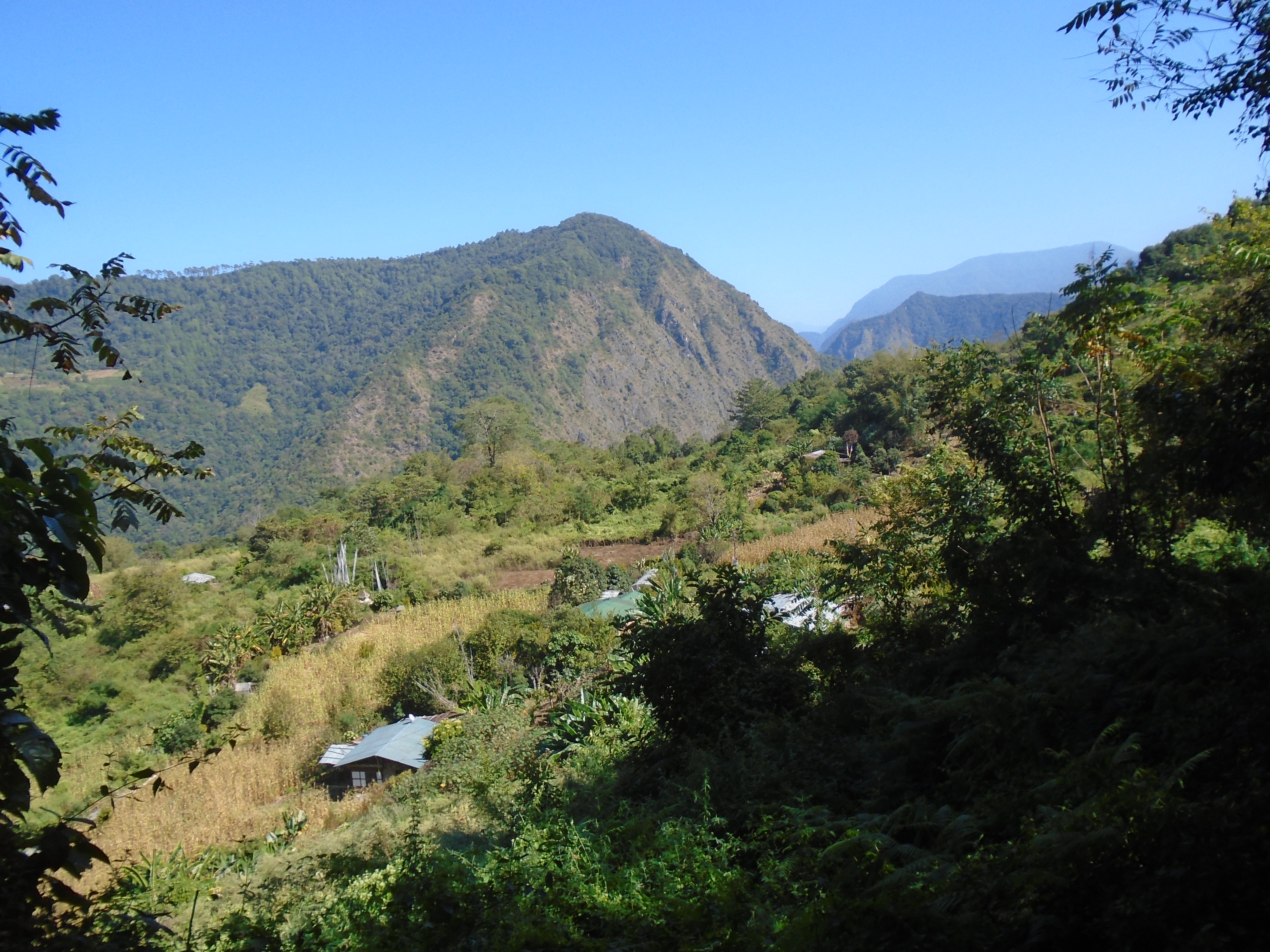
Mountainous landscape surrounding Gongdu village
View of Gongdu village.
View of Daksa village and surrounding hills
View of Daksa, the Gongdue gewog headquarters, including the gewog office, basic health unit and primary school.
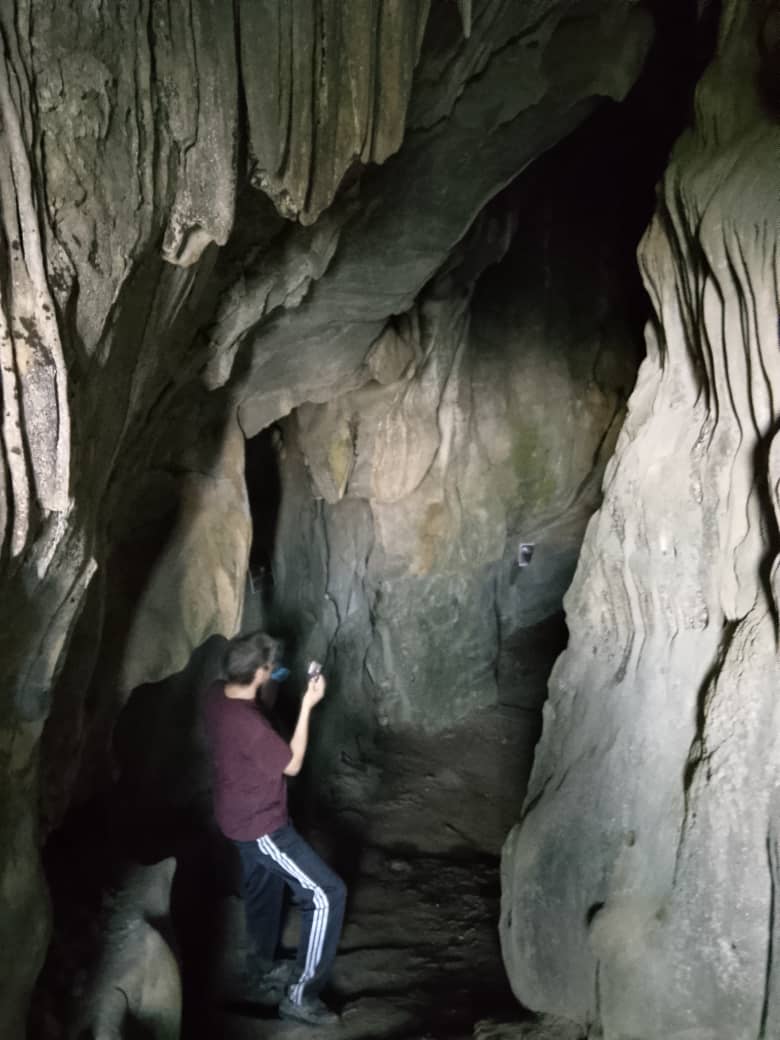
Interior of a cave at Toekor village with a person holding a light
The upper cave at the Toekor cave complex. Caves in the area contain stalactites and stalagmites, extend deep into the mountains, and are home to bat colonies.

Next steps

A follow-up field visit in January 2027 will survey the remaining villages of Bangbangla, Bogarbi, Kumadzong and Laptsa and collect wordlists, verbal agreement paradigms, and additional natural speech.
Documenting Monkha in Riti and Cungseng

09 October 2026

Tshering Om Tamang and Sonam Lhamo, Research Assistant, continued linguistic fieldwork in Riti and Cungseng. The fieldwork focused on recording and documenting Monkha with community members, contributing to the ongoing research on the language and its use in everyday life.

They arrived in Riti, in Jigmechoeling Gewog, Sarpang Dzongkhag, on 21 September and conducted linguistic data collection from 22 to 26 September. The work involved recording language data with community members and adding to the material gathered during earlier field visits. Time spent in the village also provided opportunities to engage with speakers in their everyday surroundings and gain a better understanding of the contexts in which Monkha is used.

On 23 September, they celebrated Blessed Rainy Day with a Monpa family in Riti. Sharing the occasion offered an opportunity to experience local traditions and spend time with the family outside the formal recording sessions. The celebration was also a reminder that documenting a language involves more than recording words and conversations; it means engaging with the people, traditions and everyday experiences that give the language its place in community life.

Reaching Riti presented several challenges. A landslide caused a roadblock at Dochula, while ongoing road-widening work led to a blockage on the Trongsa–Gelephu road. In addition, the bridge leading into Riti, which had been washed away by monsoon flooding in July, had been replaced by a makeshift bridge. Although it allowed access to the village, crossing it remained precarious. These conditions added practical difficulties to the visit, but linguistic data collection continued throughout the planned period in Riti.

On 27 September, they travelled to Cungseng, where they continued collecting linguistic data until 3 October. From 5 to 7 October, Tshering collected additional linguistic data in Jigmechoeling Gewog. These visits extended the ongoing documentation of Monkha through recordings and direct engagement with speakers in the communities where the language is spoken.

Documenting Gongduk with Speakers in Thimphu

06 October 2026

From October 6th, 2026, onwards, Tim and Rinchen have been holding discussions and making recordings with the large Gongduk-speaking population living in Bhutan’s capital, Thimphu. Our survey results show that of the 1261 Gongduk mother tongue speakers, around 32% lives in the home village, with another 8% living in other Gongduk villages in the gewog. This means that only 40% of the Gongduk speakers forms part of what could be considered a Gongduk speech community. In contrast, 56% lives scattered in towns and villages elsewhere in Bhutan, with 50% of those, or 350 people, living in Thimphu. Less than 4% of the Gongduk mother tongue speakers, or 50 people, live abroad.

The Gongduk community in Thimphu is a very diverse group, including elderly people, often living there with their children, civil servants, people employed in the security forces and private business, students, and monks. Some left their native village relatively recently, whereas others have already spent several decennia outside Gongdue gewog. While they all consider Gongduk their mother tongue, the level of proficiency is highly dependent on the individual’s life history and educational and professional profile. Most notably, in mixed marriages, the Gongduk spouse almost unequivocally linguistically assimilates to the non-Gongduk spouse, not transferring the language to their children. While there is a community association in Thimphu that brings together people, mainly during bereavements, there is not a real community focusing on the preservation and promotion of the language. Many speakers were engaged with their professional and personal lives, and so we are very grateful to the people who managed to set aside a day or even a couple of hours to interact with us and share their stories, their views and their ideas.

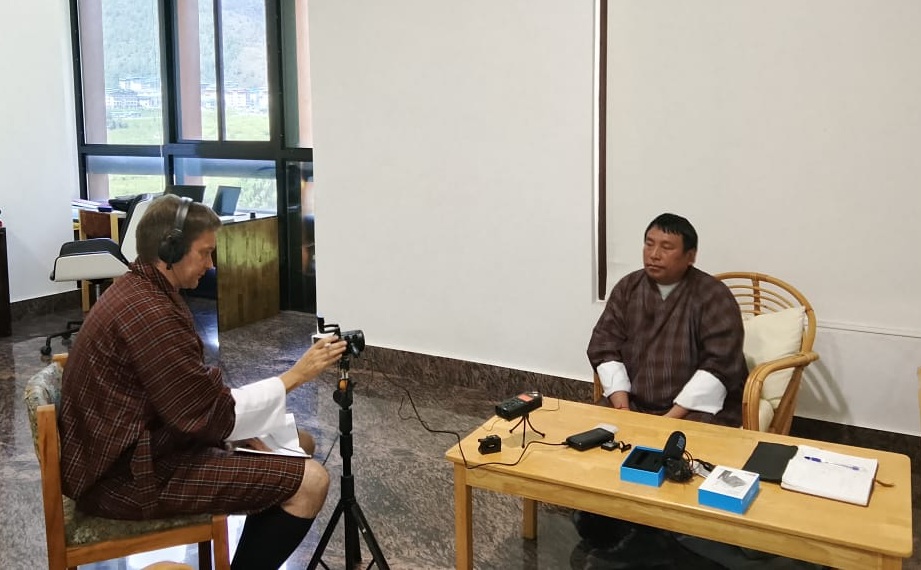
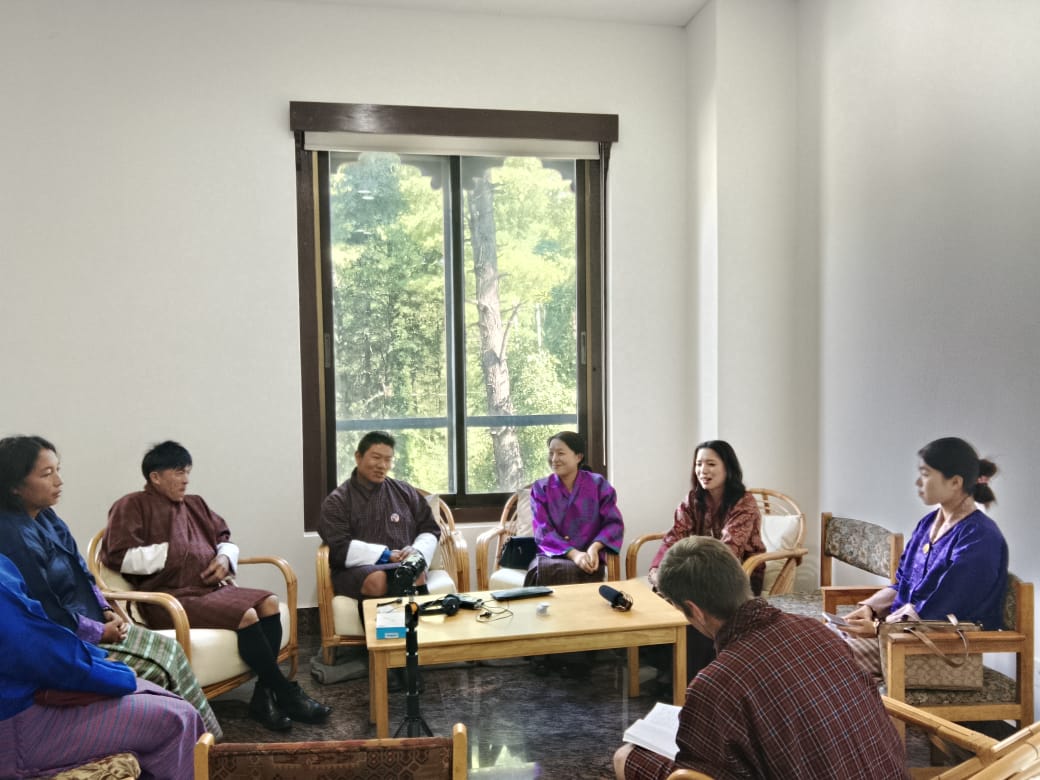
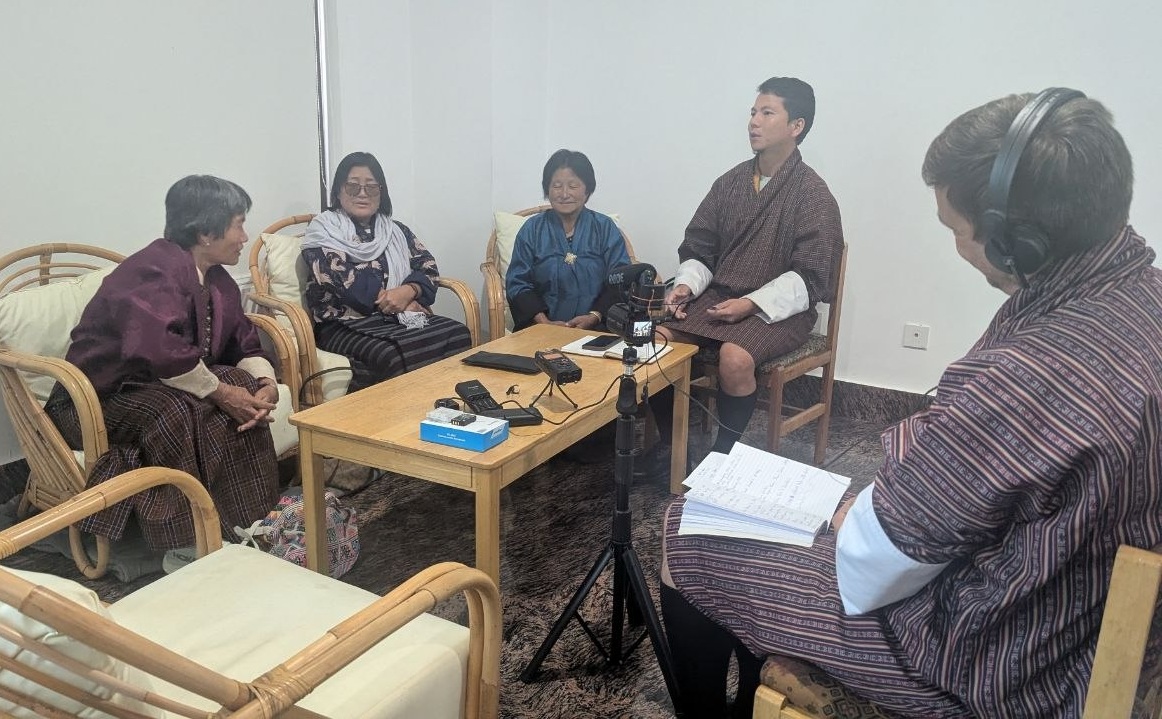
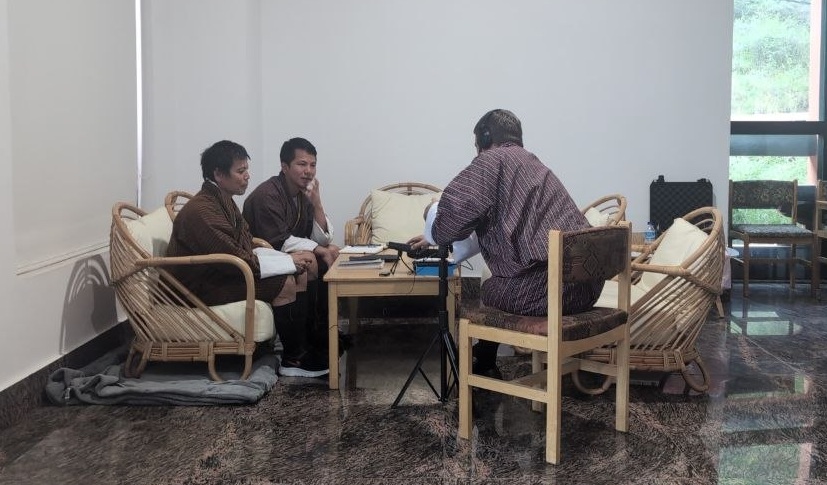
Here are some photographs from the Gongduk documentation sessions in Thimphu.

Group elicitation session with Gongduk speakers
Eliciting verbal agreement with Dorji Dema (64), Tshewang Lhamo (49) and Sangay Lhamo (60), originally from Daksa and Gungdu.
Recording narratives with a Gongduk speaker
Recording narratives from Tshewang Gyeltshen (64), originally from Bakla.
Individual narrative recording session
Recording narratives from Rinchen Wangdi (57), originally from Bogarbi.
Group discussion with Gongduk speakers
Holding a discussion with speakers in their 20s and 30s originally from Daksa, Miden, Bangbangla, Bakla, Weringla and Gungdu villages.

Kuensel Reports on Access Challenges Affecting Riti and Jigmecholing

22 July 2026

Recent reporting in Kuensel, Bhutan's national newspaper, has highlighted the infrastructure challenges affecting access to Jigmecholing and nearby Monpa communities during the monsoon season.

On 12 July 2026, the bridge providing access to the Monpa village of Riti, referred to as Ritey in the Kuensel article, was washed away by flooding caused by heavy monsoon rain. A temporary footbridge was later constructed, but the article reports continued concerns among residents about the need for a more durable bridge.

A second Kuensel article, published on 15 July 2026, reported on difficult road conditions along the Gelephu–Trongsa highway, especially around the landslide-prone Boxcut area. Jigmecholing serves as an important access point to the Monpa villages of Riti and Cungseng, where Lo-Rig project member Tshering Om Tamang conducts linguistic fieldwork.

These reports help illustrate the precarious infrastructure connecting remote communities in Bhutan and the practical challenges involved in conducting linguistic fieldwork in such areas.

The articles are available online through Kuensel:

Field Visit to Chungseng Village

13-17 March 2026

Between 13th and 17th March 2026, Ms Tshering Om Tamang and Sonam Lhamo visited Chungseng village to carry out fieldwork on the Monkha language.

During the visit, the researchers collected primary data on local language use and community perspectives. An important activity was a community meeting, where the team introduced the aims and scope of the Lo Rig Project, with particular focus on documenting Monkha language. Following the presentation, community members shared their knowledge, experiences, and perspectives on language preservation.

Alongside the meeting, Ms Tshering and Sonam Lhamo collected language samples from speakers in the village. They recorded natural conversations and oral narratives to capture everyday speech and elicited word lists to document the vocabulary of the Monkha language. These focused efforts aimed to provide an accurate record of authentic language use to support ongoing documentation and preservation of Monkha.

Community members attending a meeting in Chungseng village

Community members attending a meeting in Chungseng village (March 2026).

Fieldwork data collection session in Chungseng village

Fieldwork data collection session in Chungseng village (March 2026).

Community Meetings in Pam and Miden

3-5 March 2026

Rinchen visited the remote Gongduk communities of Pam, Caibi and Miden, where he introduced the Lo-Rig project, held consultations with community members, and conducted the sociolinguistic survey.

Due to the lack of a guide, he was unable to visit Bangbangla, possibly the most remote Gongduk village. A future visit is planned for autumn 2026.

People from Miden village attending the consultative meeting about the Lo-Rig project (March 2026)

People from Miden village attending the consultative meeting about the Lo-Rig project (March 2026).

Field Visit to Phuzur, Jangbi and Wangling Villages

10-25 February 2026

Sonam travelled to Trongsa district to conduct fieldwork among the speakers of Monkha in the villages of Phuzur (her home village), Jangbi, and Wangling.

During the visit, she completed the sociolinguistic survey of all households in these villages. She also interacted with Pamo Dorjimo, one of the two remaining Pamo (female "Bon" or pre-Buddhist practitioners) in the villages. Pamo Dorjimo provided detailed information on the various patrilineal clans (or "castes") that were once found among the Monpa people and which of these clans still exist today. Sonam also clarified several outstanding questions concerning the transcription and translation of earlier recordings.

From 18 February onwards, Sonam joined the Monpa community in celebrating Dawa Dangpai Losar, the traditional New Year celebration, which lasts several days. During the daytime, men play khuru (darts) and degor (stone put). At the same time, groups of women conduct changkor: they visit every household, sing traditional songs, and are then served ara, singchang, and bangchang, local alcoholic drinks, in return. In the evening, it is the men’s turn to perform changkor.

During Losar, the main meals of the day are taken together

During Losar, the main meals of the day are taken together.

Fieldwork Visit to Daksa Village

06-12 December 2025

Between 06 and 12 December 2025, the Gongduk Research Assistant Rinchen visited Daksa village under Gongdue block, Mongar district, where he attended and documented the Kharphu festival.

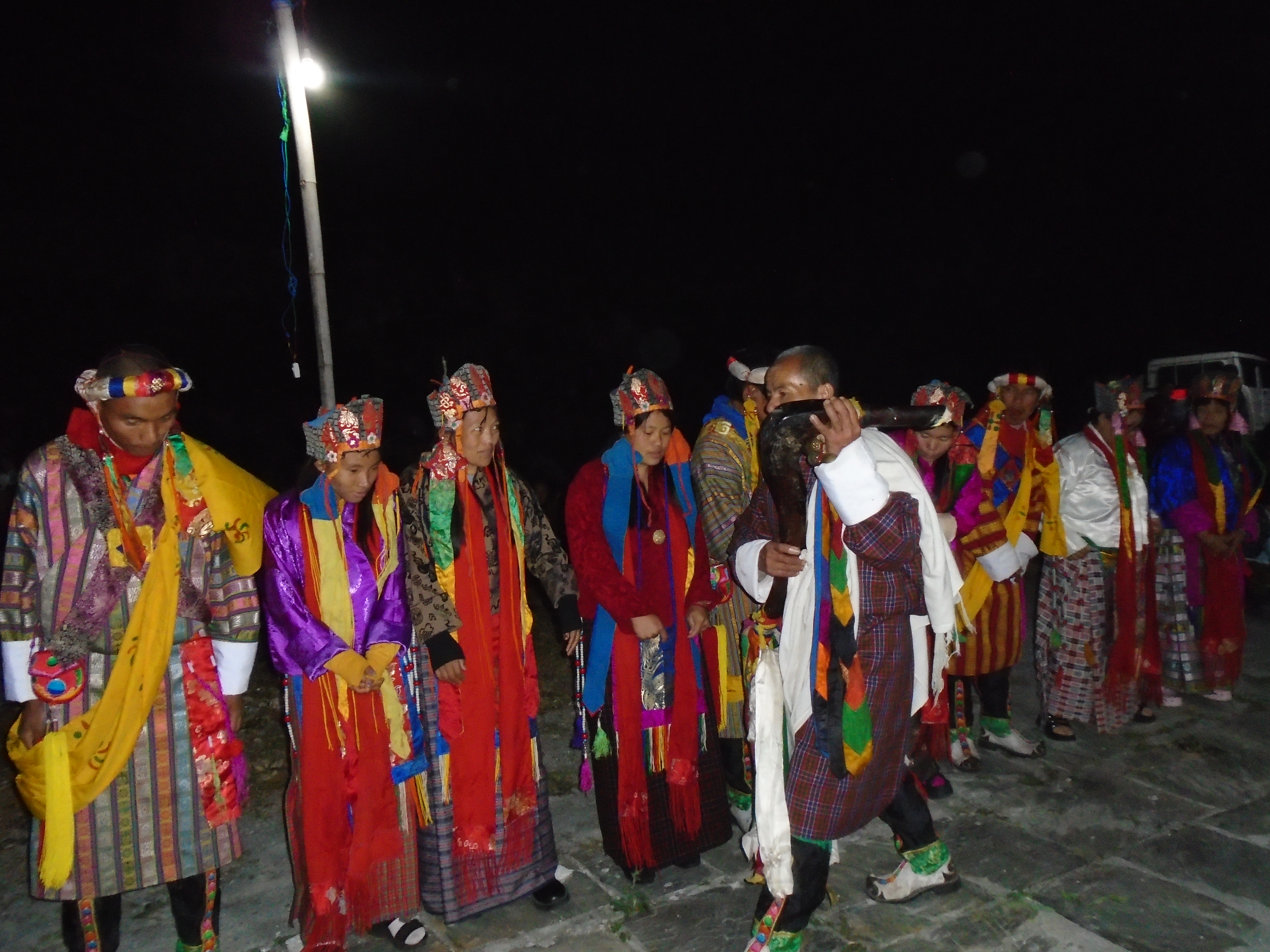
Bopa (male) and boma (female) dancers participating in the Kharphu festival in Daksa village, Mongar district, December 2025.

Bopa (male) and boma (female) dancers participating in the Kharphu festival in Daksa village, Mongar district, December 2025.

Fieldwork Visit to Riti Village

October-November 2025

Between 27 October and 01 November 2025, the project PI Tim and the Monkha Research Assistant Sonam visited the village of Riti under Jigmechoeling block, Sarpang district. Riti is located 88 kilometres from Gelephu city. The road is only partially paved, and the journey can take between six and ten hours depending on road conditions, with roadblocks frequently occurring, in particular at a location known as Boxcut on the Gelephu–Zhemgang highway.

Riti village was established approximately 80 years ago by Monpa people who migrated from Rukha village in Wangdue Phodrang district. The Monkha varieties spoken in Rukha and Riti are very similar. The inhabitants of Riti depend almost entirely on large cardamom as a cash crop.

In Riti, Sonam and Tim conducted an awareness session with a representative from each of the 15 Monpa households. During this session, they explained the purpose of the Lo-Rig project and its goals and objectives. Community members were asked for their understanding of and permission for the research and were given the opportunity to ask questions or raise concerns.

Explaining the goals of the Lo-Rig project and its procedures to representatives from all the Monpa households in Riti village.

Explaining the goals of the Lo-Rig project and its procedures to representatives from all the Monpa households in Riti village (October 2025).

Several community members noted that on previous occasions Western, Japanese, and Bhutanese researchers had visited their village, asked questions about their language, made recordings, took notes, and in some cases even drew blood. However, no results, books, or other outcomes were ever shared with the community, which had led to considerable disappointment. Sonam and Tim assured the community that the Lo-Rig project would strive to produce tangible outcomes that would also be shared with them, which was received positively by the assembled participants.

Subsequently, Sonam and Tim made recordings of narratives provided by the two most senior community members, Ap Singye and Ap Tandin. They also recorded a wordlist from Tenzin and Peday.

Octogenarians Ap Singye and Am Benze of Riti village.

Octogenarians Ap Singye and Am Benze of Riti village (October 2025).