Skip to content

Blog

Tshering Om Tamang Registers as PhD Student at Trinity College Dublin

01 March 2026

On 01 March 2026, Tshering Om Tamang officially registered as a PhD student at Trinity College Dublin.

Tshering's doctoral research will focus on the preparation of a descriptive grammar of the Monkha language as spoken in the Riti and Cungseng speech communities in Sarpang district, Bhutan. Her work will form a central component of the Lo-Rig project's long-term documentation and description of Monkha varieties.

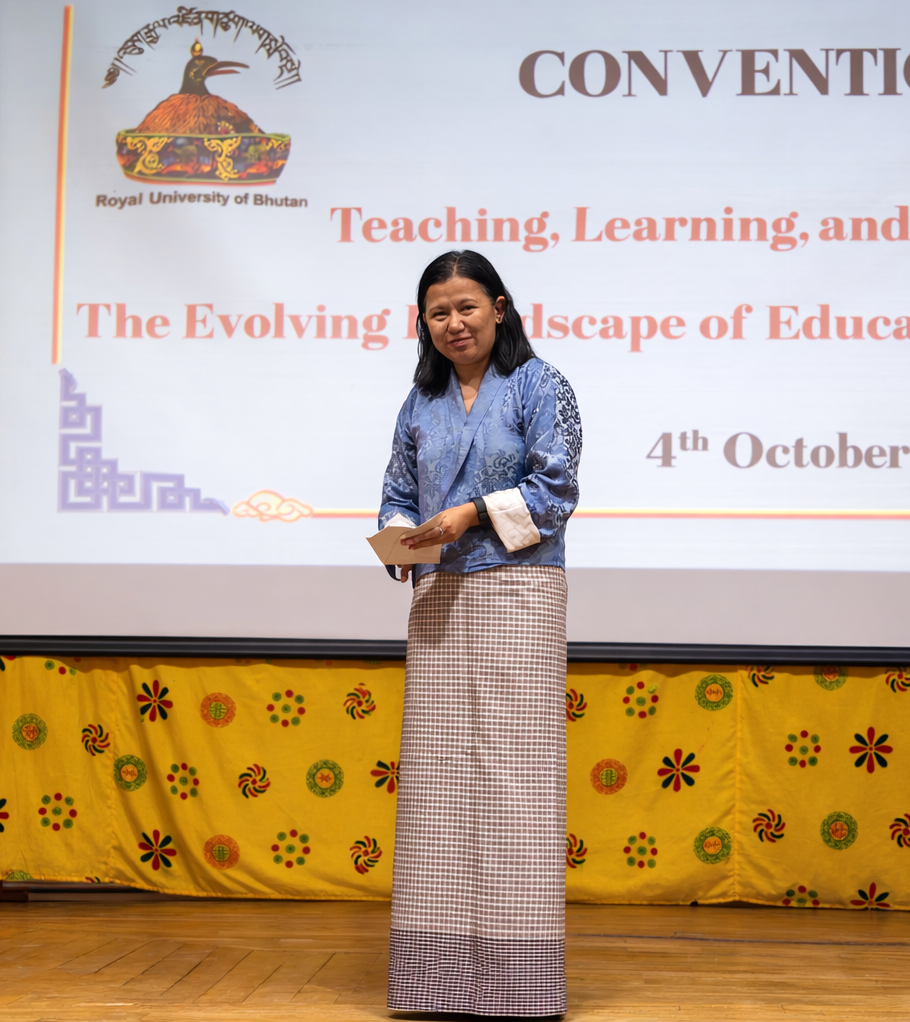
Tshering Om Tamang at the Royal University of Bhutan

Tshering Om Tamang at the Royal University of Bhutan.

While Tshering received her visa for Ireland after a four-month wait in early March, she is still waiting for her passport to be returned and is also unable to travel to Dublin due to travel restrictions in the Middle East. The project team looks forward to welcoming her in person once the necessary arrangements have been completed.

The Lo-Rig project is delighted to have Tshering formally join the team and anticipates a productive collaboration in the years ahead.

Research Seminar on Speech Technologies for Under-Resourced Languages

17 February 2026

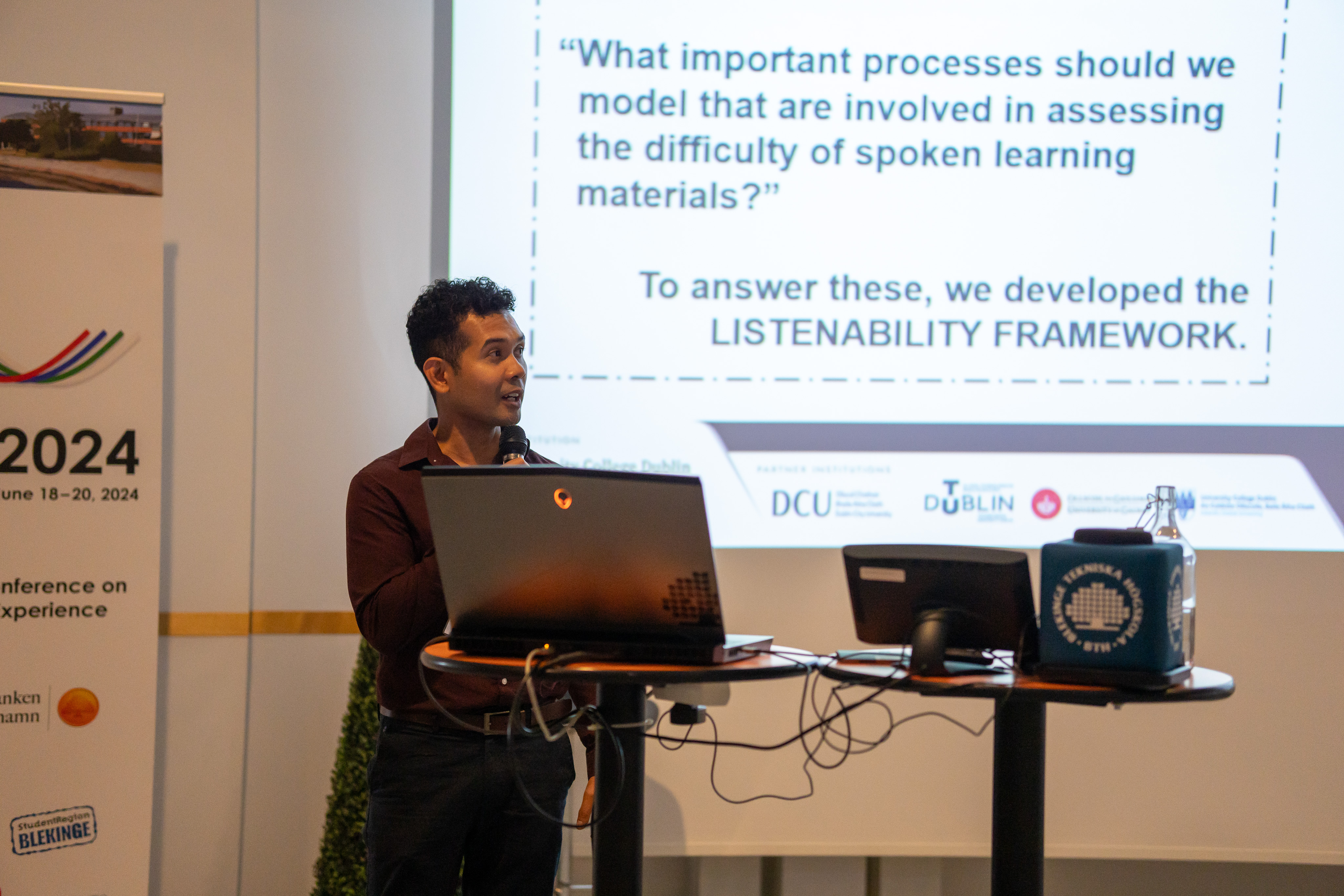
On 17 February 2026, Lo-Rig researcher Michael Bayona gave a talk titled “Speech Technologies for Under-Resourced Languages: From Development to Application” as part of the Trinity College Dublin Linguistics Research Seminar series.

The talk provided an overview of how speech technologies such as automatic speech recognition and forced alignment can be developed and adapted in under-resourced language settings. Drawing on previous work with Philippine languages, it discussed how speech and language data can support downstream applications such as linguistic analysis, closed captioning, reading tutors, and educational technologies.

The talk also considered methodological issues that remain important for under-resourced language technology development, including limited data availability, speaker variability, pronunciation dictionary development, model adaptation, and the use of newer self-supervised learning approaches.

This addressed questions closely connected to the project's work on AI-assisted workflows for language documentation, particularly the use of speech processing tools to support transcription, analysis, and language technology development.

More information about the seminar is available on the Trinity College Dublin website:

Speech Technologies for Under-Resourced Languages: From Development to Application

Field Visit to Phuzur, Jangbi and Wangling Villages

10-25 February 2026

Sonam travelled to Trongsa district to conduct fieldwork among the speakers of Monkha in the villages of Phuzur (her home village), Jangbi, and Wangling.

During the visit, she completed the sociolinguistic survey of all households in these villages. She also interacted with Pamo Dorjimo, one of the two remaining Pamo (female "Bon" or pre-Buddhist practitioners) in the villages. Pamo Dorjimo provided detailed information on the various patrilineal clans (or "castes") that were once found among the Monpa people and which of these clans still exist today. Sonam also clarified several outstanding questions concerning the transcription and translation of earlier recordings.

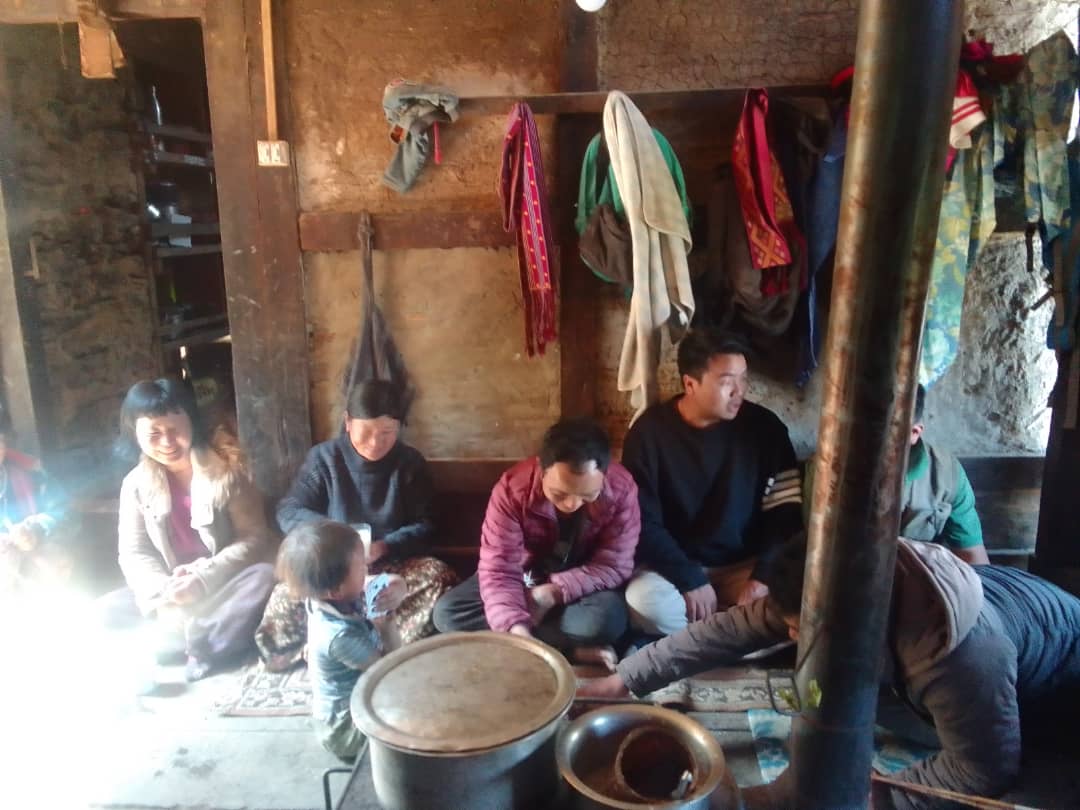
From 18 February onwards, Sonam joined the Monpa community in celebrating Dawa Dangpai Losar, the traditional New Year celebration, which lasts several days. During the daytime, men play khuru (darts) and degor (stone put). At the same time, groups of women conduct changkor: they visit every household, sing traditional songs, and are then served ara, singchang, and bangchang, local alcoholic drinks, in return. In the evening, it is the men’s turn to perform changkor.

During Losar, the main meals of the day are taken together

During Losar, the main meals of the day are taken together.

Michael Bayona Joins the Lo-Rig Project

01 February 2026

On 1 February 2026, Michael Bayona joined the Lo-Rig project as a postdoctoral research fellow.

Michael specialises in speech processing and artificial intelligence. Within the project, he will apply and further develop computational methods for the analysis of Gongduk and Monkha, with a particular focus on accelerating the transcription and processing of recorded materials. His work will also contribute to the development of digital tools and applications that speakers can use to support and promote their respective languages.

Michael Bayona, Postdoctoral Research Fellow on the Lo-Rig project.

Michael Bayona, Postdoctoral Research Fellow on the Lo-Rig project.

The Lo-Rig project team warmly welcomes Michael and looks forward to a productive collaboration over the coming three years.

Research Assistant Training in Thimphu

11 January 2026

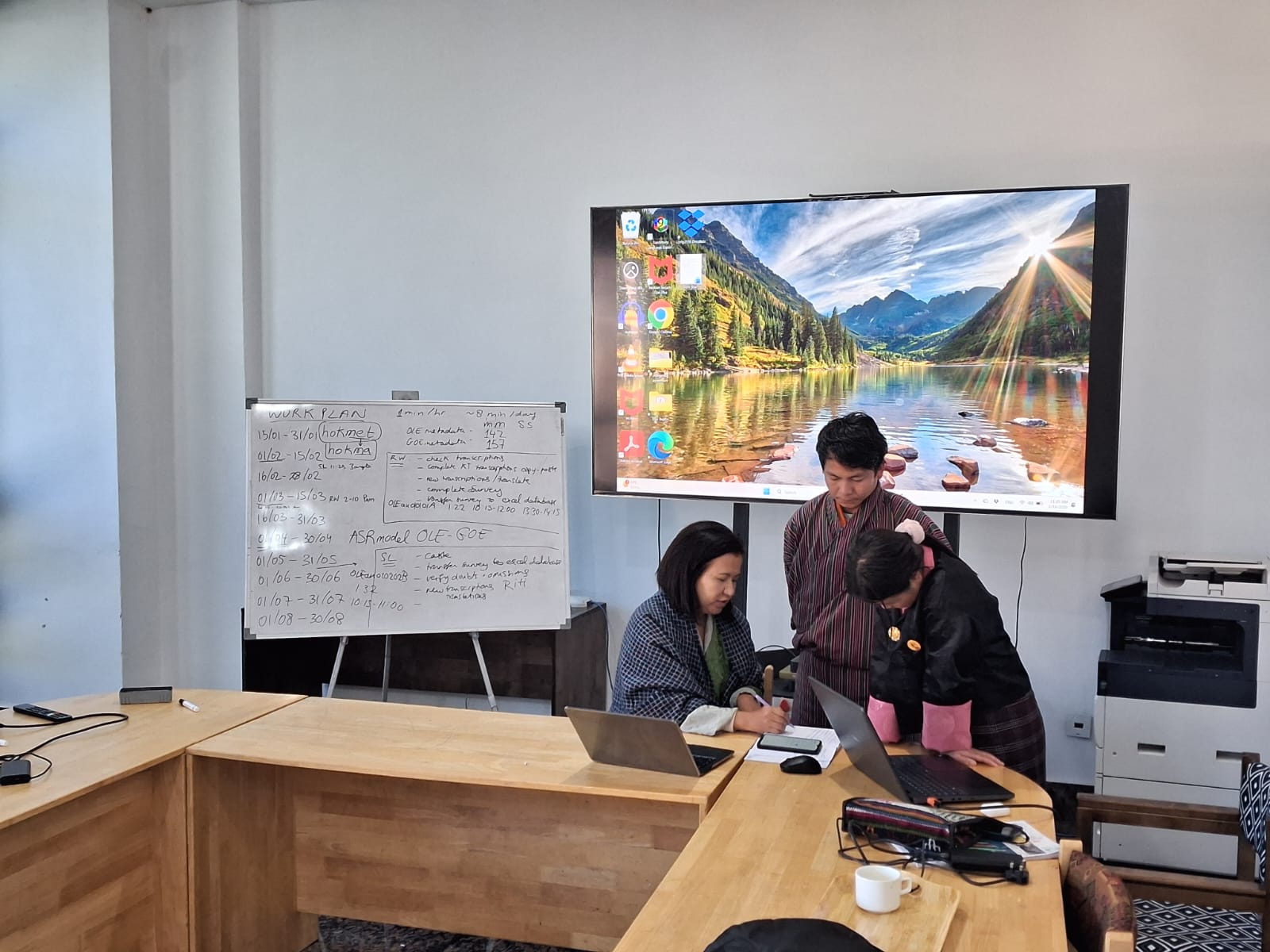
Tim continued with training the Research Assistants Sonam and Rinchen at the Center for Bhutan and GNH Studies in Thimphu. They had made Monpa speech communities and with the transcription and translation of the recordings. This week, the Lo-Rig team was also joined by Ms. Tshering Om Tamang, the PhD candidate for the Lo-Rig project who will work on the documentation and description of Monkha. Together, the team discussed the research in detail and made a planning for the coming months.

Tshering sharing her knowledge and skills with Sonam and Rinchen during Research Assistant training in Thimphu, January 2026.

Tshering sharing her knowledge and skills with Sonam and Rinchen during Research Assistant training in Thimphu (January 2026).

Fieldwork Visit to Daksa Village

06-12 December 2025

Between 06 and 12 December 2025, the Gongduk Research Assistant Rinchen visited Daksa village under Gongdue block, Mongar district, where he attended and documented the Kharphu festival.

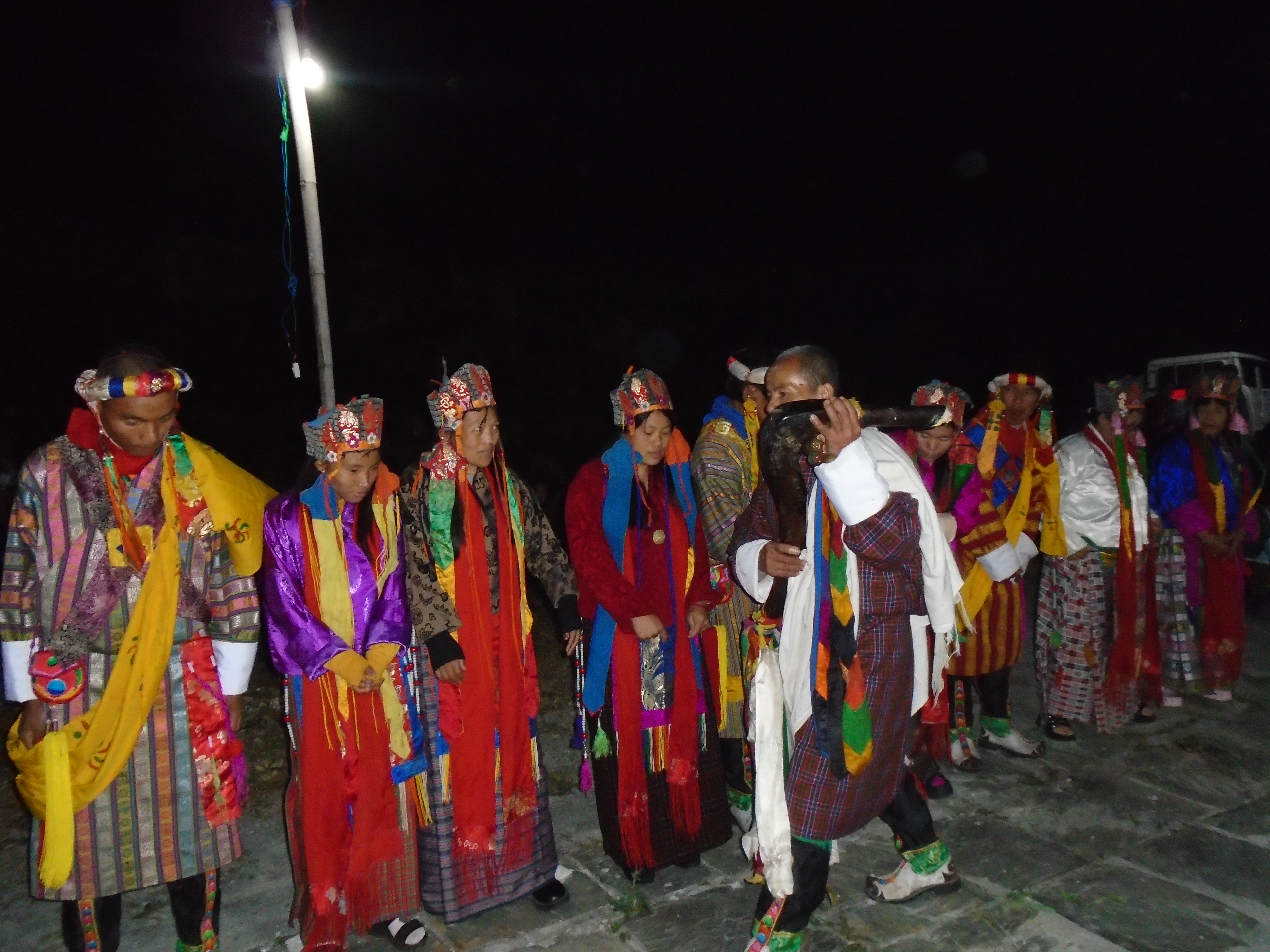
Bopa (male) and boma (female) dancers participating in the Kharphu festival in Daksa village, Mongar district, December 2025.

Bopa (male) and boma (female) dancers participating in the Kharphu festival in Daksa village, Mongar district, December 2025.

Fieldwork Visit to Riti Village

October-November 2025

Between 27 October and 01 November 2025, the project PI Tim and the Monkha Research Assistant Sonam visited the village of Riti under Jigmechoeling block, Sarpang district. Riti is located 88 kilometres from Gelephu city. The road is only partially paved, and the journey can take between six and ten hours depending on road conditions, with roadblocks frequently occurring, in particular at a location known as Boxcut on the Gelephu–Zhemgang highway.

Riti village was established approximately 80 years ago by Monpa people who migrated from Rukha village in Wangdue Phodrang district. The Monkha varieties spoken in Rukha and Riti are very similar. The inhabitants of Riti depend almost entirely on large cardamom as a cash crop.

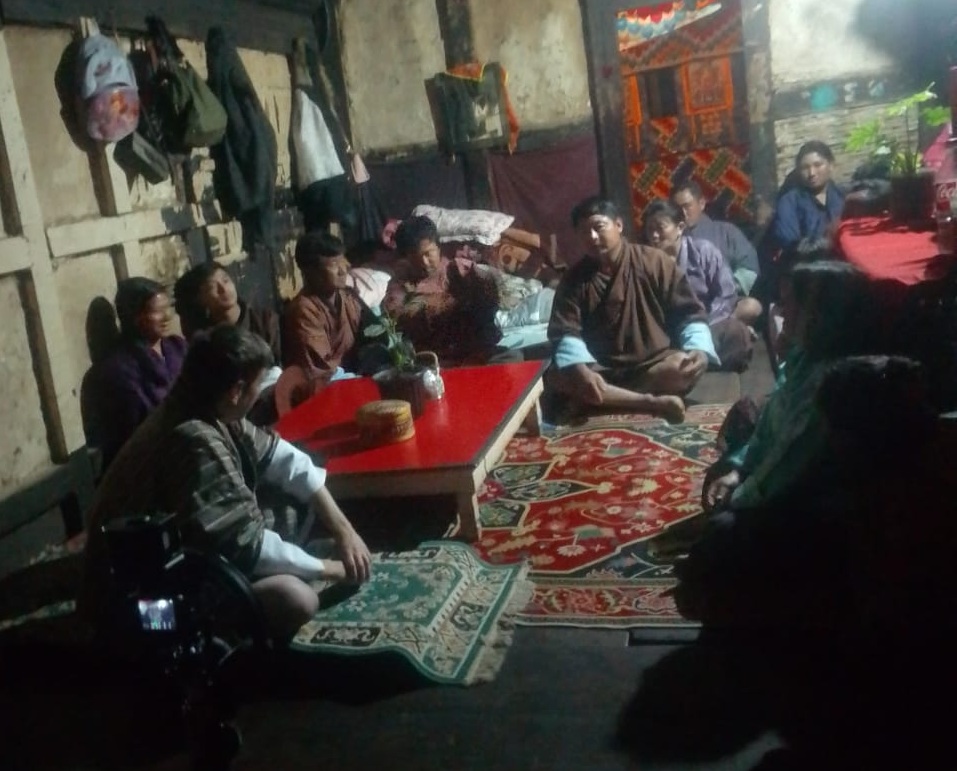
In Riti, Sonam and Tim conducted an awareness session with a representative from each of the 15 Monpa households. During this session, they explained the purpose of the Lo-Rig project and its goals and objectives. Community members were asked for their understanding of and permission for the research and were given the opportunity to ask questions or raise concerns.

Explaining the goals of the Lo-Rig project and its procedures to representatives from all the Monpa households in Riti village.

Explaining the goals of the Lo-Rig project and its procedures to representatives from all the Monpa households in Riti village (October 2025).

Several community members noted that on previous occasions Western, Japanese, and Bhutanese researchers had visited their village, asked questions about their language, made recordings, took notes, and in some cases even drew blood. However, no results, books, or other outcomes were ever shared with the community, which had led to considerable disappointment. Sonam and Tim assured the community that the Lo-Rig project would strive to produce tangible outcomes that would also be shared with them, which was received positively by the assembled participants.

Subsequently, Sonam and Tim made recordings of narratives provided by the two most senior community members, Ap Singye and Ap Tandin. They also recorded a wordlist from Tenzin and Peday.

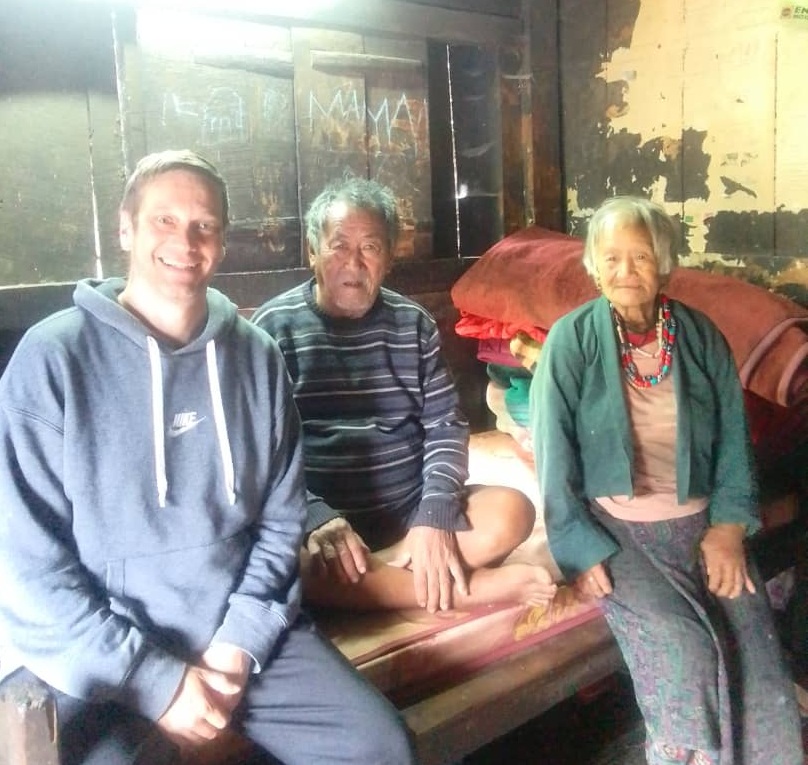
Octogenarians Ap Singye and Am Benze of Riti village.

Octogenarians Ap Singye and Am Benze of Riti village (October 2025).

Research Assistant Training

October-November 2025

Between 06 and 24 October and between 17 and 28 November 2025, the project PI Tim conducted a training programme for the two Bhutanese Research Assistants, Sonam and Rinchen. The training commenced with an introduction to the Lo-Rig project goals and objectives, the project staff, and the work packages and planning for the five years of the project.

The Research Assistants were also introduced to the field of linguistics, including topics such as basic phonetics and phonology and the International Phonetic Alphabet (IPA), parts of speech, verbal agreement including the project's focus on biactantial and polypersonal verbal agreement, orthographies and orthography development, and the linguistic diversity of Bhutan.

The two Research Assistants were familiarised with important topics such as research ethics, data protection, informed consent, open access, and cybersecurity. The Participant Information Leaflets (PILs) and Informed Consent Forms developed at Trinity College Dublin were translated into Dzongkha and subsequently summarised and translated into Gongduk and Monkha.

The Research Assistants were introduced to best practices in linguistic fieldwork. They translated the regionally relevant wordlist into Dzongkha and Tshangla and practised elicitation and transcription in their respective languages, Monkha and Gongduk.

The Research Assistants also practised using the recording equipment in different contexts and conditions. A field visit was made to the Folk Heritage Museum in Canggangkha, Thimphu, to gain an understanding of the types of household items, tools, and practices that would be of interest for elicitation and recording in their respective communities.

The Research Assistants received their project laptops, and the required software was installed on them. Tim explained the ELAN–FLEx workflow and the potential scope and benefits of applying Automatic Speech Recognition to speed up the transcription of recordings. They then practised the manual transcription of recordings in ELAN.
Network Meeting on Automating Language Documentation and Description

17–19 September 2025

Between 17 and 19 September 2025, Lo-Rig Principal Investigator Tim Bodt participated in a network meeting on "Automating language documentation and description", held at Uppsala University in Sweden.

The meeting brought together around 20 academic researchers working in language documentation and human language technologies. Participants discussed how language technologies could be better incorporated into the work of linguists documenting and describing endangered languages.

This meeting contributed to wider collaboration and knowledge exchange around the role of technological tools in supporting language documentation and description.

Presentation at the 58th International Conference on Sino-Tibetan Languages and Linguistics

04 September 2025

On 04 September 2025, Lo-Rig Principal Investigator Tim Bodt presented on "Contact between Kusunda and Sino-Tibetan" at the 58th International Conference on Sino-Tibetan Languages and Linguistics (ICSTLL58), held at the Department of Linguistics, University of Bern, Switzerland.

The talk was attended by around 30 linguists working on the Sino-Tibetan (Trans-Himalayan, Tibeto-Burman) language family, to which Gongduk and Monkha also belong.

More information about ICSTLL58 is available on the University of Bern website:

58th International Conference on Sino-Tibetan Languages and Linguistics